Quapaw Quarter's Victorian homes with full basements need fast water extraction when storms strike or a sump pump fails. The IICRC-standard crew reaches you within 2-3 hours and starts extraction immediately to protect basement walls and framing.

Crews measure standing water depth and identify sources, shut off active flows, and deploy submersible pumps sized for Quapaw Quarter's typically deep basement water volumes.
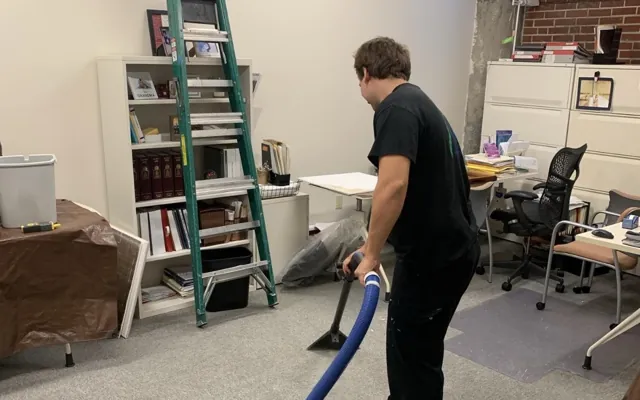
Truck-mounted extractors move hundreds of gallons per hour from Quapaw Quarter basements and first-floor rooms, clearing standing water to expose all wet surfaces for assessment.
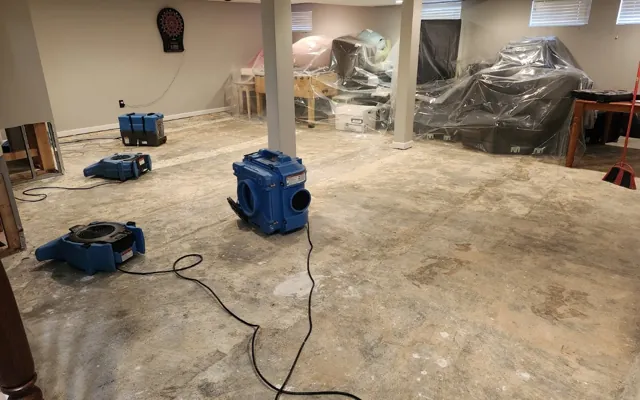
Dehumidifiers and air movers position throughout Quapaw Quarter basements pull moisture from foundation walls and old framing; crews monitor daily until all cavities and masonry reach standard dryness levels.

Water extraction in Quapaw Quarter generally runs $500 to $3,000 as a stand-alone service, though it is usually the first phase of a larger drying and restoration job. The cost depends on the volume of water, the category, and how much of it is hidden in the structure. When the loss stems from a sudden, covered event, crews document the source and volume for your insurance claim.
Quapaw Quarter is Little Rock's oldest and most architecturally significant residential district, where 100-plus-year-old Victorian and early-1900s homes often have basements that are rare elsewhere in the city. These historic basements flood easily when heavy spring storms overwhelm sump pumps or when aging galvanized plumbing fails upstairs, and that water can damage irreplaceable foundation and structural walls. Quapaw Quarter's full basements are its signature and its vulnerability. Heavy spring and summer thunderstorms overwhelm aging sump systems, and the original galvanized plumbing in these National Register homes corrodes and fails. Water trapped in basement walls and old foundation cavities spreads silently through masonry and wood framing. From Quapaw Quarter, crews also cover nearby Governor's Mansion District, South Main Residential Historic District, Downtown, MacArthur Park District, Capitol View/Stifft's Station, Hillcrest. See every neighborhood and town on the full service area page.
See all areas servedEvery loss is photographed, measured, and logged from the first visit, so the paperwork holds up with your insurance carrier.
Technicians follow recognized IICRC drying standards and prove the work with daily moisture readings, not guesswork.
Emergency dispatch any hour of the day or night, with a real crew on the way, not a callback in the morning.
A real crew dispatched any hour, not a callback in the morning.
Trained technicians following recognized IICRC drying standards.
Truck-mounted, portable, and submersible for any size loss.
The loss is documented and billed to the carrier directly.
Yes. Many homes here have sump systems that are 30 to 50 years old and underrated for the volume spring storms produce. When you see standing water in the basement after rain, don't wait; call immediately so crews can extract before water damages the foundation or framing.
It absolutely can. Water trapped in masonry foundation walls and old wood framing leads to mold, rot, and structural failure over time. In Quapaw Quarter homes, fast extraction and drying after a flood is essential to save the foundation. Every day of wet walls in a 100-year-old house adds risk.
Crews are on call 24 hours a day and can be on the way to Quapaw Quarter within the hour.
Call (501) 287-9058