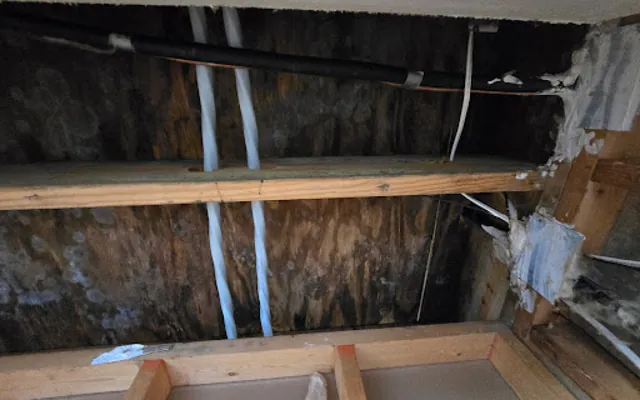
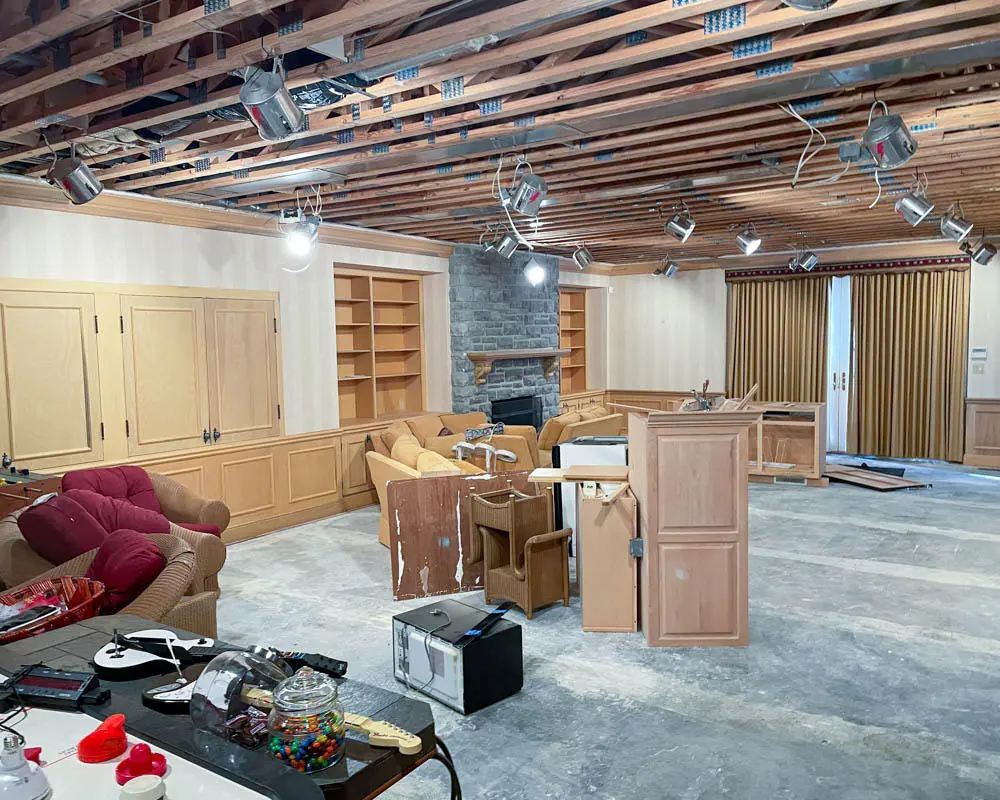
Ice dams are rare in Little Rock, but the occasional snow followed by a hard freeze can back water up under the shingles and into the ceilings. Arkansas Water and Fire dries and repairs it, IICRC-standard, local, and on-site in about an hour.

Crews inspect the attic, ceilings, and exterior walls, mapping where the backed-up water got in and how far it spread with moisture meters and thermal imaging.
Standing water and saturated attic insulation are removed, and crews open wet ceiling or wall sections where needed so the trapped moisture can escape and dry.
Air movers and dehumidifiers dry the roof deck, framing, ceilings, and walls the meltwater reached, with daily readings until the whole area returns to a safe level.
Crews rebuild the ceilings and walls, and recommend better attic insulation and ventilation so the rare next snow does not melt unevenly and dam up again.

While help is on the way, these first steps, done only where it is safe, limit the damage and protect the insurance claim.
Shut the supply off at the source, or close the home's main valve if the source is not obvious. Stopping the flow limits the damage more than anything else.
Switch off electricity to the affected area, but only if the breaker can be reached without standing in or touching the water.
Get a crew dispatched right away. The sooner extraction and drying begin, the more flooring, drywall, and belongings can be saved.
Take photos and a short video of the water and the affected rooms before anything is moved, so the insurance claim starts strong.
Ice dam water damage in Little Rock usually runs $1,500 to $7,000 when it happens, since the water often reaches attic insulation, ceilings, and exterior walls at once. The cost depends on how long the dam held and how far the meltwater spread. Sudden ice-dam leaks are commonly covered by homeowner insurance, and crews document the cause and moisture readings for your claim.
Crews reach Little Rock and central Arkansas fast, from Hillcrest and The Heights to the Quapaw Quarter, Pulaski Heights, and nearby North Little Rock and Sherwood. See the full list on the areas served across Little Rock page.
See all areas servedEvery loss is photographed, measured, and logged from the first visit, so the paperwork holds up with your insurance carrier.
Technicians follow recognized IICRC drying standards and prove the work with daily moisture readings, not guesswork.
Emergency dispatch any hour of the day or night, with a real crew on the way, not a callback in the morning.
A real crew dispatched any hour, not a callback in the morning.
Trained technicians following recognized IICRC drying standards.
Truck-mounted, portable, and submersible for any size loss.
The loss is documented and billed to the carrier directly.
They are uncommon here, but not impossible. In the rare winter when snow sits on the roof and a hard freeze lingers for days, ice can dam at the eaves and back water under the shingles. It is not a yearly worry like it is up north, but when it does occur the damage is real.
Heat escaping through a poorly insulated attic melts snow higher on the roof, the water runs down to the freezing eave, and it refreezes into a dam. Meltwater then pools behind that ice with nowhere to go and works its way under the shingles into the attic and ceilings below.
Crews do not recommend it. Chipping at ice can damage shingles and gutters and is dangerous on a cold, sloped roof. The better move is to address the water already inside and then fix the cause with attic insulation and ventilation. Crews handle the interior damage and point you to the roofing fix.
Sudden interior water damage from an ice dam is commonly covered by homeowner policies, though coverage for the roof itself varies. Because this is a rare event here, good documentation helps. Crews photograph the source, log the moisture, and give your adjuster a clear scope of the affected areas.
Little Rock crews are on call 24 hours a day, local and fast, and can be on the way within the hour.
Call (501) 287-9058