When water is standing in your home, every minute it sits does more damage. Arkansas Water and Fire pumps and vacuums it out fast across Little Rock, then dries the structure, IICRC-standard, local, and on-site in about an hour.

Crews identify the water source and category, shut it off if it is still flowing, and set up the right pumps and extractors for the volume and surfaces involved.
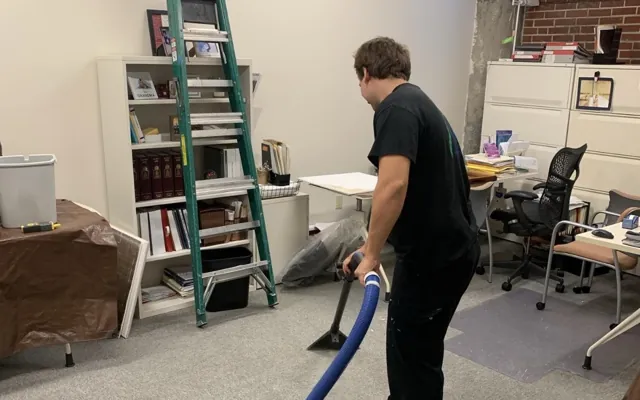
Truck-mounted and submersible pumps clear large volumes, and portable extractors pull water from carpet, pad, and hard floors down to the last that they can lift.
Crews scan the subfloor, wall cavities, and under cabinets with moisture meters to extract or expose water that is hiding where it would keep the structure wet.
With the standing water gone, crews position air movers and dehumidifiers to dry the structure and begin the daily moisture monitoring that carries the job to completion.

While help is on the way, these first steps, done only where it is safe, limit the damage and protect the insurance claim.
Shut the supply off at the source, or close the home's main valve if the source is not obvious. Stopping the flow limits the damage more than anything else.
Switch off electricity to the affected area, but only if the breaker can be reached without standing in or touching the water.
Get a crew dispatched right away. The sooner extraction and drying begin, the more flooring, drywall, and belongings can be saved.
Take photos and a short video of the water and the affected rooms before anything is moved, so the insurance claim starts strong.
Water extraction in Little Rock generally runs $500 to $3,000 as a stand-alone service, though it is usually the first phase of a larger drying and restoration job. The cost depends on the volume of water, the category, and how much of it is hidden in the structure. When the loss stems from a sudden, covered event, crews document the source and volume for your insurance claim.
Crews reach Little Rock and central Arkansas fast, from Hillcrest and The Heights to the Quapaw Quarter, Pulaski Heights, and nearby North Little Rock and Sherwood. See the full list on the areas served across Little Rock page.
See all areas servedEvery loss is photographed, measured, and logged from the first visit, so the paperwork holds up with your insurance carrier.
Technicians follow recognized IICRC drying standards and prove the work with daily moisture readings, not guesswork.
Emergency dispatch any hour of the day or night, with a real crew on the way, not a callback in the morning.
A real crew dispatched any hour, not a callback in the morning.
Trained technicians following recognized IICRC drying standards.
Truck-mounted, portable, and submersible for any size loss.
The loss is documented and billed to the carrier directly.
Because standing water does damage every minute it sits. It soaks deeper into floors and walls, ruins more material, and starts feeding mold within about a day in the climate. Removing the water fast is what determines how much of your home can be dried and saved rather than torn out and replaced.
For a small spill, maybe, but a real water loss is deceptive. A shop vacuum cannot reach water in the subfloor, wall cavities, or under cabinets, and that hidden water keeps the structure wet and grows mold. The truck-mounted and submersible equipment removes far more, and the meters find what a vacuum misses.
Crews do not rely on what is visible. Moisture meters and thermal imaging show the crew water hiding in the subfloor, walls, and cabinets, and crews extract or expose it until the readings confirm the standing and trapped water is gone. Only then do crews move into structural drying with confidence.
Extraction is the first phase, not the whole job. Once the standing water is gone, the structure still holds moisture that has to be dried with air movers and dehumidifiers, monitored daily. Crews carry the job through that drying and any needed repairs, so extraction flows straight into full restoration.
Little Rock crews are on call 24 hours a day, local and fast, and can be on the way within the hour.
Call (501) 287-9058