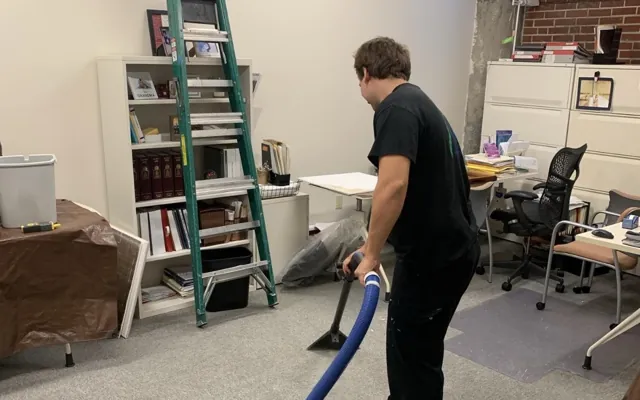
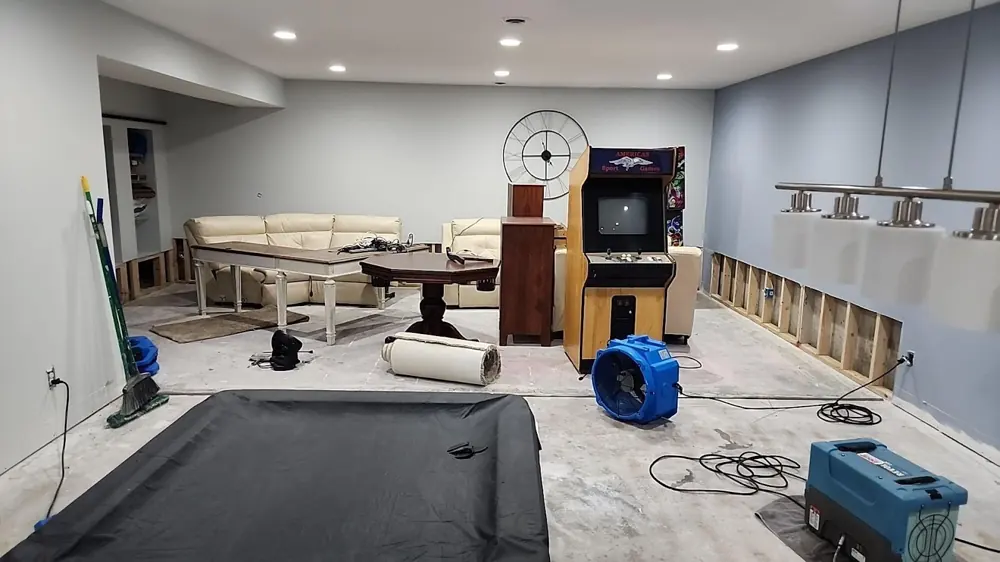
Hardwood and water do not mix, and once the boards cup or buckle, quick drying is what decides whether they can be saved. Arkansas Water and Fire dries wood floors across Little Rock, IICRC-standard, local, and on-site in about an hour.

Crews remove any standing water and measure the moisture in the boards and subfloor, mapping how far it spread so the drying plan targets the wet wood precisely.
Crews use hardwood drying systems that pull moisture from the boards and the subfloor together, along with dehumidifiers, to draw the water out in a controlled, even way.
Crews track the moisture in the wood daily as it dries, giving cupped boards the time and conditions to flatten back out instead of drying unevenly and staying deformed.
Boards that flattened are sanded and refinished to match, and only the sections too far gone to recover are replaced, keeping as much of your original floor as possible.

While help is on the way, these first steps, done only where it is safe, limit the damage and protect the insurance claim.
Shut the supply off at the source, or close the home's main valve if the source is not obvious. Stopping the flow limits the damage more than anything else.
Switch off electricity to the affected area, but only if the breaker can be reached without standing in or touching the water.
Get a crew dispatched right away. The sooner extraction and drying begin, the more flooring, drywall, and belongings can be saved.
Take photos and a short video of the water and the affected rooms before anything is moved, so the insurance claim starts strong.
Hardwood floor water damage in Little Rock usually runs $1,500 to $7,000, depending on the square footage affected, how long the water sat, and how much can be dried and refinished versus replaced. Fast, specialized drying often saves boards that would otherwise be lost, which lowers the total. When the source is a sudden, covered leak, crews document the damage and coordinate your insurance claim.
Crews reach Little Rock and central Arkansas fast, from Hillcrest and The Heights to the Quapaw Quarter, Pulaski Heights, and nearby North Little Rock and Sherwood. See the full list on the areas served across Little Rock page.
See all areas servedEvery loss is photographed, measured, and logged from the first visit, so the paperwork holds up with your insurance carrier.
Technicians follow recognized IICRC drying standards and prove the work with daily moisture readings, not guesswork.
Emergency dispatch any hour of the day or night, with a real crew on the way, not a callback in the morning.
A real crew dispatched any hour, not a callback in the morning.
Trained technicians following recognized IICRC drying standards.
Truck-mounted, portable, and submersible for any size loss.
The loss is documented and billed to the carrier directly.
Often, yes, if it is dried quickly and correctly. Cupping happens when the boards absorb moisture and swell at the edges. With specialized drying systems that pull the water out evenly and daily monitoring, many floors flatten back to normal. The key is starting fast, before the cupping sets permanently in the humid climate.
Not right away. Replacing sound wood that could have dried is a waste, and a full replacement rarely matches the character of an existing floor perfectly. Crews dry and monitor first, then replace only the boards that truly cannot recover, which usually saves most of your original floor and lowers the cost.
Longer than most surfaces, usually about a week to ten days, because wood releases moisture slowly and has to dry evenly to flatten. Rushing it can crack the boards. Crews use hardwood-specific equipment and check moisture daily, pulling the gear only once the wood reaches a stable, safe reading.
When the water came from a sudden, covered event like an appliance line or a burst pipe, the resulting hardwood damage is usually covered once you meet your deductible. Slow leaks left unaddressed may be excluded. Crews document the source, the moisture, and the affected area so your adjuster can evaluate the claim.
Little Rock crews are on call 24 hours a day, local and fast, and can be on the way within the hour.
Call (501) 287-9058