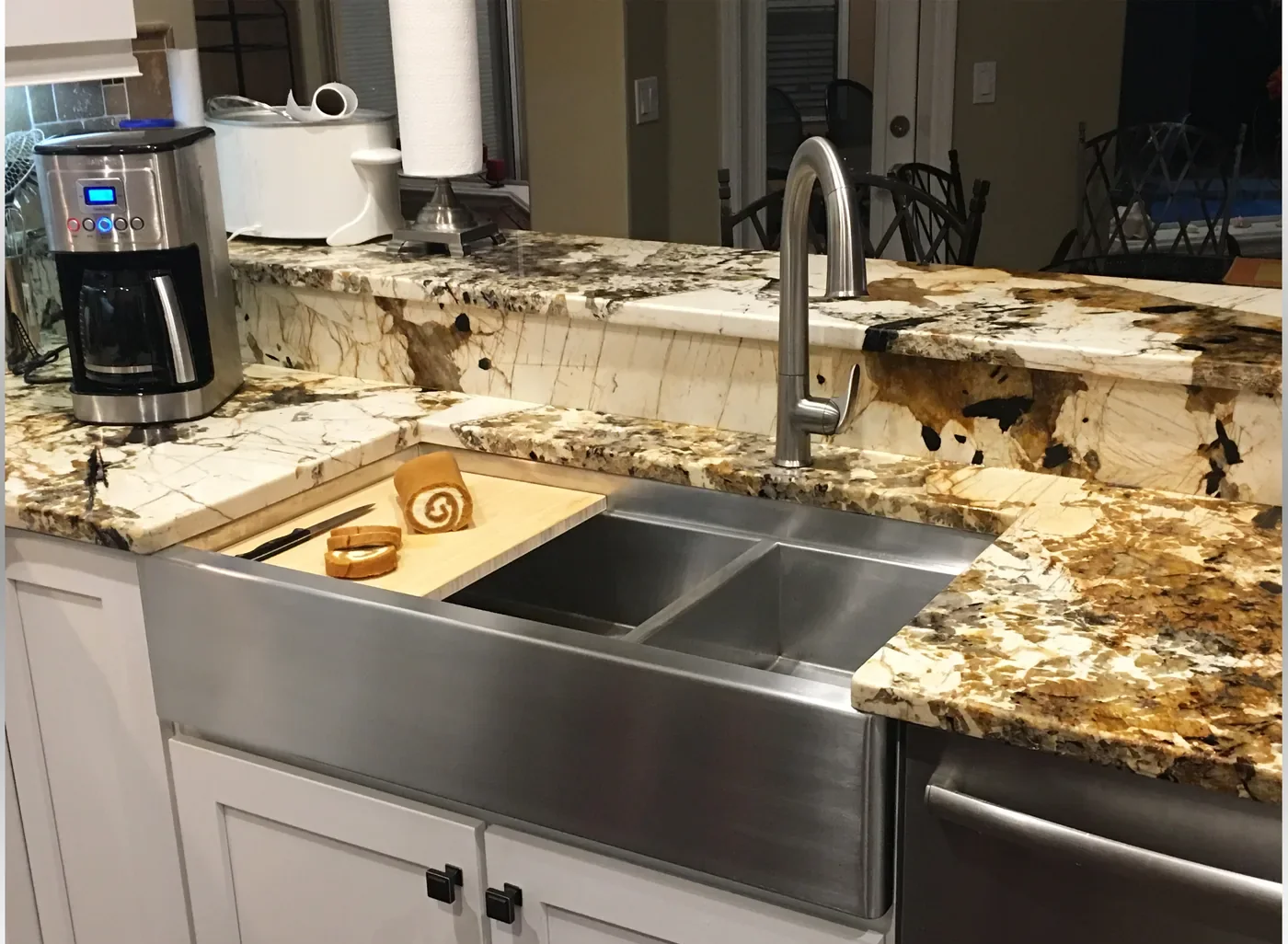
A kitchen sink left running or a jammed drain sends water over the counter and into the cabinets and floor fast. Arkansas Water and Fire extracts it and dries the cabinets and subfloor in Little Rock, IICRC-standard, local, and on-site in about an hour.

Crews remove the standing water from the floor and cabinet, then check the base, subfloor, and toe-kick with moisture meters to see how far the overflow spread.
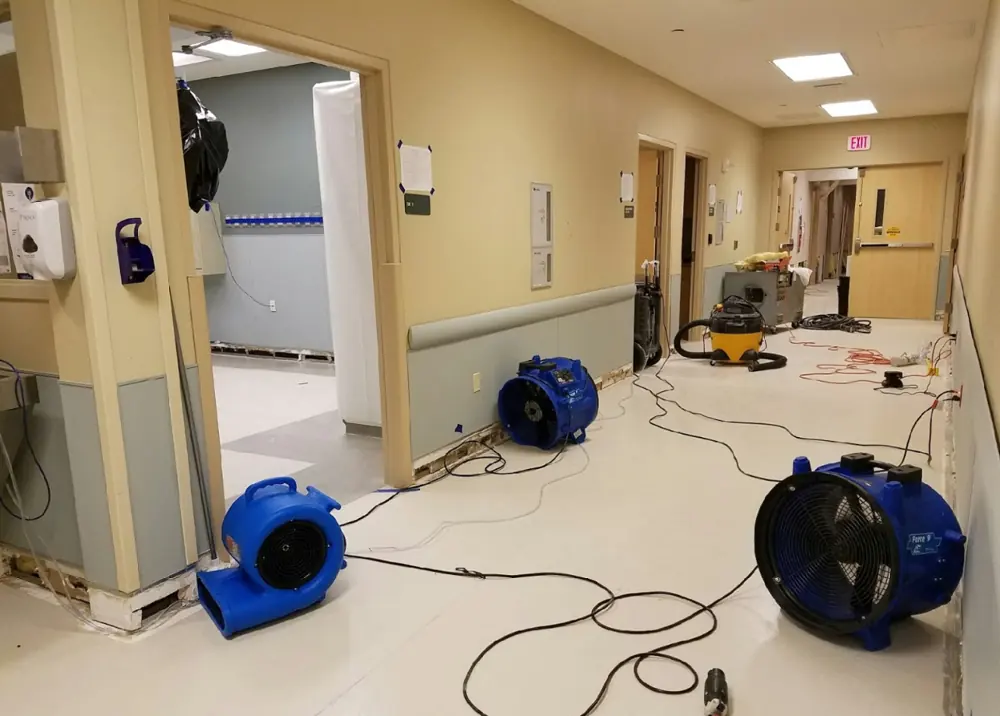
Crews open the cabinet base and lift or drill flooring where the readings are high, then run air movers and a dehumidifier to dry the cabinet, subfloor, and floor layers.
Surfaces that stayed wet long enough to grow mold are cleaned and treated with antimicrobial, especially inside the enclosed cabinet where the overflow water collected.
Crews replace swollen cabinet panels and damaged flooring, reseal around the sink, and restore the kitchen so the cabinets and floor are solid and dry again.

While help is on the way, these first steps, done only where it is safe, limit the damage and protect the insurance claim.
Shut the supply off at the source, or close the home's main valve if the source is not obvious. Stopping the flow limits the damage more than anything else.
Switch off electricity to the affected area, but only if the breaker can be reached without standing in or touching the water.
Get a crew dispatched right away. The sooner extraction and drying begin, the more flooring, drywall, and belongings can be saved.
Take photos and a short video of the water and the affected rooms before anything is moved, so the insurance claim starts strong.
Kitchen sink overflow cleanup in Little Rock generally runs $600 to $3,000. A quick floor and cabinet dry sits at the low end, while water that reached the subfloor, hardwood, or a downstairs ceiling raises the cost. Sudden overflows are often covered by homeowner insurance once you meet your deductible, while a slow, long-ignored leak may not be. Crews document the cause regardless.
Crews reach Little Rock and central Arkansas fast, from Hillcrest and The Heights to the Quapaw Quarter, Pulaski Heights, and nearby North Little Rock and Sherwood. See the full list on the areas served across Little Rock page.
See all areas servedEvery loss is photographed, measured, and logged from the first visit, so the paperwork holds up with your insurance carrier.
Technicians follow recognized IICRC drying standards and prove the work with daily moisture readings, not guesswork.
Emergency dispatch any hour of the day or night, with a real crew on the way, not a callback in the morning.
A real crew dispatched any hour, not a callback in the morning.
Trained technicians following recognized IICRC drying standards.
Truck-mounted, portable, and submersible for any size loss.
The loss is documented and billed to the carrier directly.
Usually not. A kitchen floor can look dry while the subfloor and the cabinet base underneath stay soaked. That hidden moisture is where mold starts and where hardwood keeps cupping. Crews use meters to check below the surface and dry the layers you cannot see, not just the floor you can.
Often, if crews dry it fast. Hardwood that cupped from a short overflow can flatten as the moisture leaves under controlled drying. Boards soaked for a long time may stay swollen or separate and need replacing. Crews dry first, measure the results, and replace only what does not come back.
It can, especially in a two-story home or over a finished basement. Water finds gaps around the sink drain and floor and drips into the ceiling beneath. If it has, crews dry both levels and check the ceiling so trapped moisture does not lead to sagging or stains later.
A sudden, accidental overflow is usually covered once you meet your deductible, particularly when it damages flooring or a ceiling below. Damage from a leak known about and left for months may be denied. Crews photograph the source and log the moisture so your claim is well supported.
Little Rock crews are on call 24 hours a day, local and fast, and can be on the way within the hour.
Call (501) 287-9058