A sump pump usually fails at the worst moment, mid-storm, when it is needed most, and the water rises fast. Arkansas Water and Fire extracts and dries the space across Little Rock, IICRC-standard, local, and on-site in about an hour.

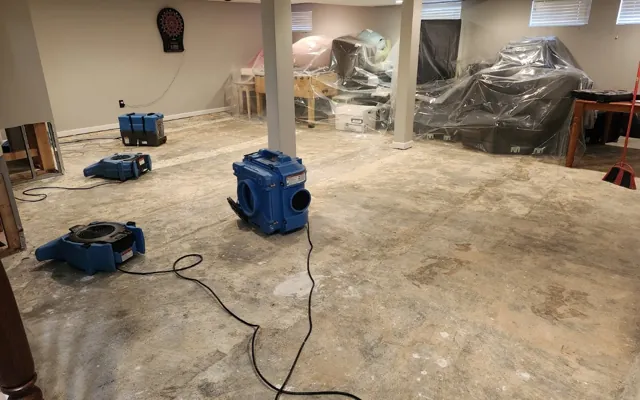
Crews pump and extract the water that collected when the pump failed, clearing the crawlspace, basement, or lower level before it soaks in any deeper.
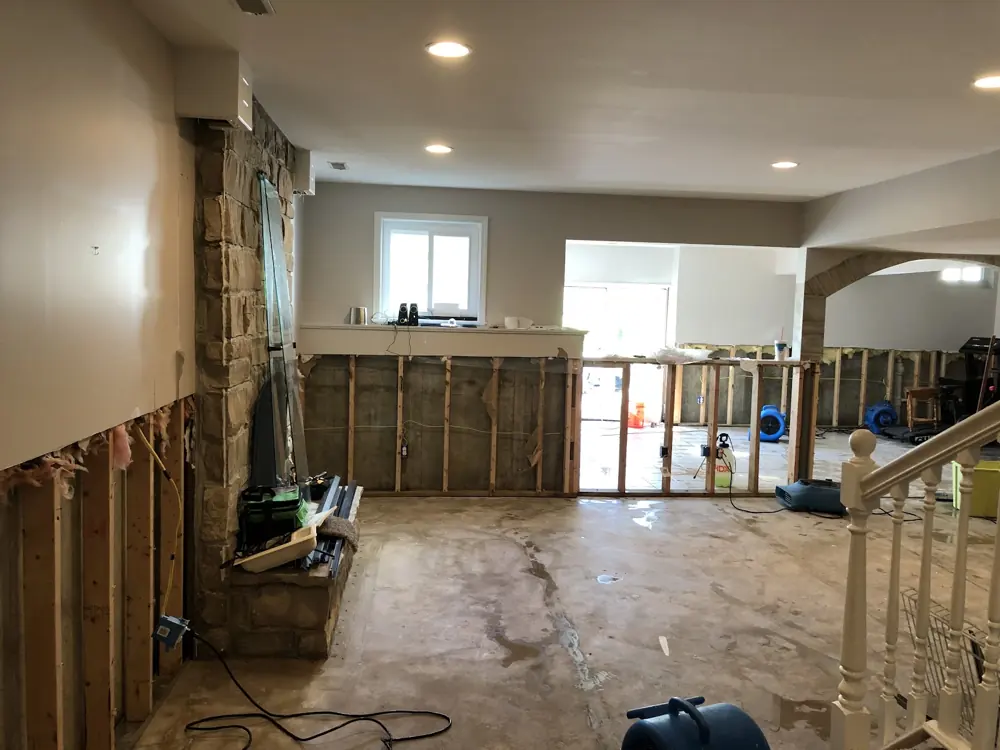
Soaked insulation, vapor barrier, or finished materials are removed as needed, and air movers and dehumidifiers dry the space, framing, and soil until readings are safe.
Crews clean and treat surfaces that stayed wet with antimicrobial to stop mold, then reset a fresh vapor barrier where the crawlspace one was soaked through.
Crews recommend a new or upsized pump with battery backup and a water alarm, so the next storm outage does not leave the space unprotected again.

While help is on the way, these first steps, done only where it is safe, limit the damage and protect the insurance claim.
Shut the supply off at the source, or close the home's main valve if the source is not obvious. Stopping the flow limits the damage more than anything else.
Switch off electricity to the affected area, but only if the breaker can be reached without standing in or touching the water.
Get a crew dispatched right away. The sooner extraction and drying begin, the more flooring, drywall, and belongings can be saved.
Take photos and a short video of the water and the affected rooms before anything is moved, so the insurance claim starts strong.
Sump pump failure cleanup in Little Rock usually runs $1,500 to $6,500, depending on how much water collected, whether it was a crawlspace or a finished lower level, and how much material was soaked. A replacement pump with battery backup adds $600 to $2,000. Sudden pump failure and the resulting water damage are often covered by homeowner insurance. Crews document the loss and coordinate your claim.
Crews reach Little Rock and central Arkansas fast, from Hillcrest and The Heights to the Quapaw Quarter, Pulaski Heights, and nearby North Little Rock and Sherwood. See the full list on the areas served across Little Rock page.
See all areas servedEvery loss is photographed, measured, and logged from the first visit, so the paperwork holds up with your insurance carrier.
Technicians follow recognized IICRC drying standards and prove the work with daily moisture readings, not guesswork.
Emergency dispatch any hour of the day or night, with a real crew on the way, not a callback in the morning.
A real crew dispatched any hour, not a callback in the morning.
Trained technicians following recognized IICRC drying standards.
Truck-mounted, portable, and submersible for any size loss.
The loss is documented and billed to the carrier directly.
It is the perfect storm of factors. Heavy rain drives the most water at the pump right when a storm knocks out power, so a pump without battery backup stops. Add a stuck float, a burned-out motor, or a pump too small for the volume, and it fails exactly when you need it most.
In central Arkansas, yes. The worst flooding comes from storms that also cause power outages, and a battery backup keeps the pump running when the grid goes down. Pairing it with a water alarm gives you warning if the water still rises, which is the most reliable protection for the space.
Quickly. During a heavy storm, a failed pump can let inches of water collect in a basement or crawlspace within an hour, since the water that should be pumped out has nowhere else to go. That is why fast extraction matters, and why crews reach most of the area in about an hour.
The resulting water damage is often covered, and a sump pump or water backup endorsement strengthens that coverage. Some policies treat pump failure differently, so the details matter. Crews document the failure, the water damage, and the moisture readings so your adjuster can apply the right coverage to your claim.
Little Rock crews are on call 24 hours a day, local and fast, and can be on the way within the hour.
Call (501) 287-9058