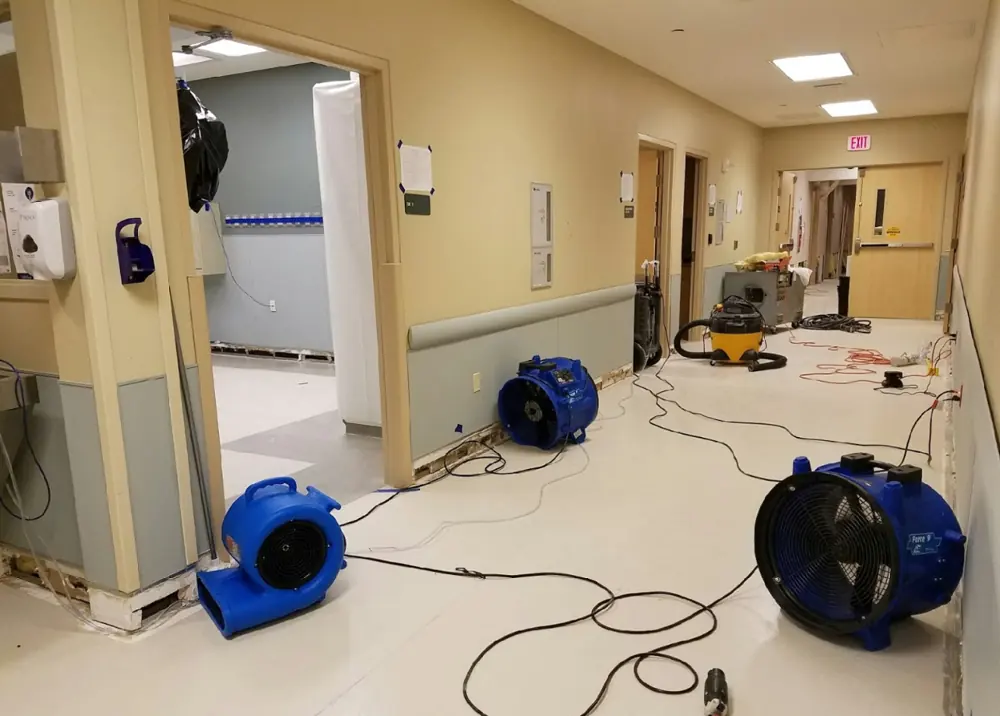
A shower or tub that leaks behind the tile or through a failing pan can soak the wall and the ceiling below for months. Arkansas Water and Fire finds and dries that hidden water in Little Rock, IICRC-standard, local, and on-site in about an hour.

Crews test the shower or tub and trace the moisture with meters and thermal imaging to pinpoint whether the water comes from the grout, pan, drain, or valve.
Crews open the wall cavity, subfloor, or ceiling below only where the readings are high, and remove any standing or trapped water so the structure can begin drying.
Air movers and a dehumidifier dry the wall cavity, subfloor, and ceiling, and crews treat any surfaces that stayed damp long enough for mold to begin forming.
Crews rebuild the wall, subfloor, or ceiling, and coordinate resealing the grout, pan, or valve so the shower or tub does not leak into the structure again.

While help is on the way, these first steps, done only where it is safe, limit the damage and protect the insurance claim.
Shut the supply off at the source, or close the home's main valve if the source is not obvious. Stopping the flow limits the damage more than anything else.
Switch off electricity to the affected area, but only if the breaker can be reached without standing in or touching the water.
Get a crew dispatched right away. The sooner extraction and drying begin, the more flooring, drywall, and belongings can be saved.
Take photos and a short video of the water and the affected rooms before anything is moved, so the insurance claim starts strong.
Shower and tub leak cleanup in Little Rock usually runs $700 to $4,000. Because these leaks hide and run for a long time, the cost depends on how far the water spread into the wall, subfloor, and ceiling below, and how much needs rebuilding. A sudden pan or valve failure may be covered by homeowner insurance, while slow grout or caulk failure is often excluded. Crews document either way.
Crews reach Little Rock and central Arkansas fast, from Hillcrest and The Heights to the Quapaw Quarter, Pulaski Heights, and nearby North Little Rock and Sherwood. See the full list on the areas served across Little Rock page.
See all areas servedEvery loss is photographed, measured, and logged from the first visit, so the paperwork holds up with your insurance carrier.
Technicians follow recognized IICRC drying standards and prove the work with daily moisture readings, not guesswork.
Emergency dispatch any hour of the day or night, with a real crew on the way, not a callback in the morning.
A real crew dispatched any hour, not a callback in the morning.
Trained technicians following recognized IICRC drying standards.
Truck-mounted, portable, and submersible for any size loss.
The loss is documented and billed to the carrier directly.
The clues usually show up away from the shower: a stain on the ceiling below, a soft or spongy floor near the tub, loose tile, or a musty smell in the bathroom. Because the leak hides behind the surface, crews use meters and thermal imaging to confirm exactly where the water is going.
No. Crews open only where the moisture readings are high, whether that is a section of wall, subfloor, or the ceiling below. That targeted approach lets the crew dry the structure and treat any mold without needless demolition, keeping your repair and your bathroom as intact as possible.
Yes, and it commonly does. Water trapped behind tile and under the pan keeps the wall cavity and subfloor constantly damp, and in the humid climate that is ideal for mold. Because the space is enclosed, mold can spread for weeks before a smell or stain finally reveals the leak.
A sudden failure, like a cracked pan or a burst valve connection, is often covered once you meet the deductible. Slow leaks from failed grout or caulk are frequently treated as maintenance and excluded. Crews document the source and the moisture readings so your adjuster can evaluate the claim fairly.
Little Rock crews are on call 24 hours a day, local and fast, and can be on the way within the hour.
Call (501) 287-9058