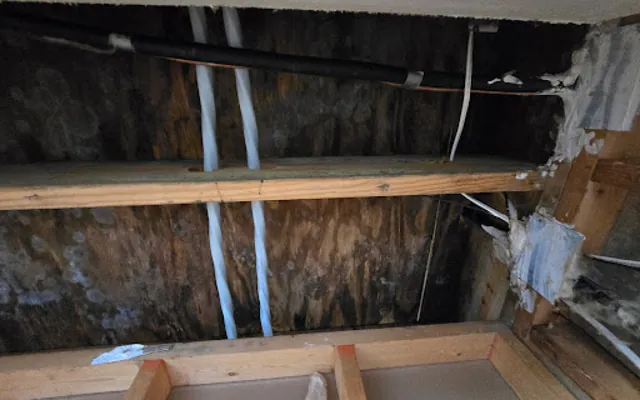
Stained ceilings and soggy insulation usually start in the attic. Storm-driven roof leaks and HVAC condensation soak decking above your Little Rock home. Arkansas Water and Fire arrives in about an hour, IICRC-standard and local, to dry it out.

Crews climb into the attic, map wet insulation and decking with moisture meters and thermal imaging, and trace the leak back to its roof or HVAC source.
Saturated insulation, soaked cardboard, and unsalvageable stored items come out so trapped moisture cannot keep feeding mold growth on the framing and sheathing above your ceilings.
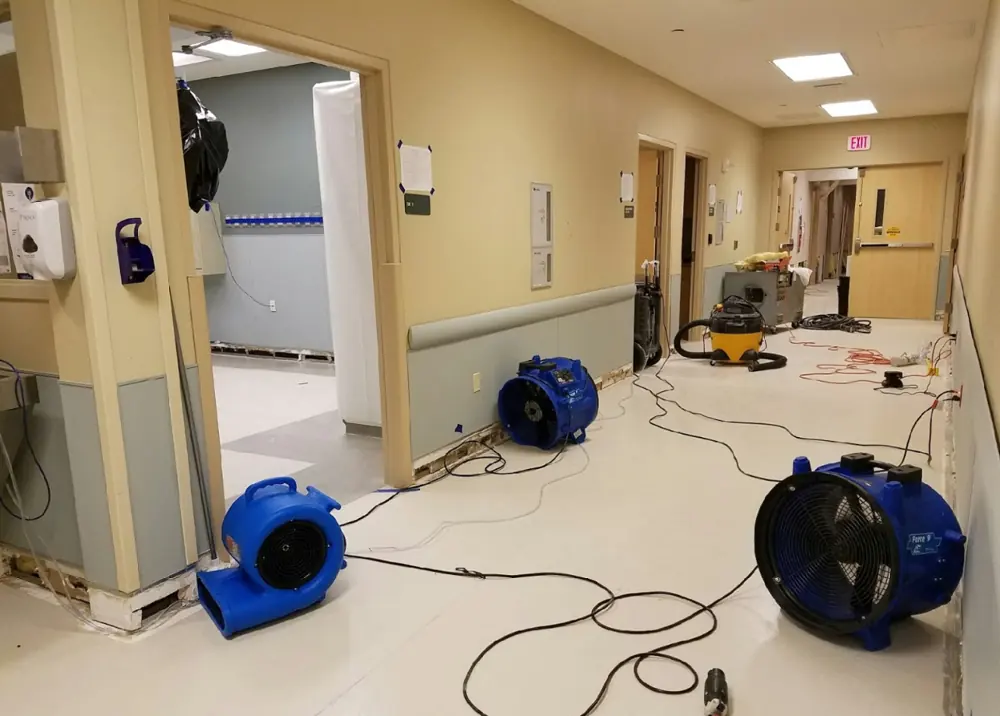
Air movers and dehumidifiers run in the attic until rafters, decking, and the ceiling below return to normal moisture readings, usually over three to five days.
Crews replace insulation to the correct R-value, seal or reroute sweating ducts, patch the ceiling drywall, and coordinate roof repairs so the leak does not return.

While help is on the way, these first steps, done only where it is safe, limit the damage and protect the insurance claim.
Shut the supply off at the source, or close the home's main valve if the source is not obvious. Stopping the flow limits the damage more than anything else.
Switch off electricity to the affected area, but only if the breaker can be reached without standing in or touching the water.
Get a crew dispatched right away. The sooner extraction and drying begin, the more flooring, drywall, and belongings can be saved.
Take photos and a short video of the water and the affected rooms before anything is moved, so the insurance claim starts strong.
Most attic water damage jobs in Little Rock run between $1,500 and $6,000. What drives the number is how far the water spread, whether insulation and ceiling drywall need full replacement, and if the roof or ductwork needs repair too. Sudden storm and roof-leak damage is usually covered by homeowner policies, and crews document everything and bill your adjuster directly.
Crews reach Little Rock and central Arkansas fast, from Hillcrest and The Heights to the Quapaw Quarter, Pulaski Heights, and nearby North Little Rock and Sherwood. See the full list on the areas served across Little Rock page.
See all areas servedEvery loss is photographed, measured, and logged from the first visit, so the paperwork holds up with your insurance carrier.
Technicians follow recognized IICRC drying standards and prove the work with daily moisture readings, not guesswork.
Emergency dispatch any hour of the day or night, with a real crew on the way, not a callback in the morning.
A real crew dispatched any hour, not a callback in the morning.
Trained technicians following recognized IICRC drying standards.
Truck-mounted, portable, and submersible for any size loss.
The loss is documented and billed to the carrier directly.
Brown rings on an upstairs ceiling, peeling paint, or a musty smell in a closet often start overhead. Crews go into the attic and use thermal imaging and moisture meters to confirm whether the source is a roof leak, sweating ductwork, or a vent problem before any repair begins.
Usually not. Once blown-in or batt insulation gets soaked it mats down, loses its R-value, and can hold mold spores. Crews remove the saturated material, dry and treat the framing underneath, then install new insulation at the correct depth so your attic performs the way it should.
It can. Warm, humid attic air in central Arkansas lets mold spread across decking and rafters within about two days, and spores drift down through ceiling gaps toward the living space. Fast drying and antimicrobial treatment stop that spread before it moves into the bedrooms below.
Sudden, accidental causes like a storm-loosened roof or a burst attic pipe are typically covered. Gradual problems from a long-neglected leak or poor ventilation may not be. Crews photograph the damage, log moisture readings, and send your adjuster a detailed scope so your claim has the support it needs.
Little Rock crews are on call 24 hours a day, local and fast, and can be on the way within the hour.
Call (501) 287-9058