A broken water main can push a large volume of water toward and into your home fast, from the street or your service line. Arkansas Water and Fire extracts and dries it across Little Rock, IICRC-standard, local, and on-site in about an hour.

Crews make sure the supply is shut at the meter or by the utility, then extract the standing water fast before it soaks further into the home.
Crews scan the floors, walls, foundation, and crawlspace with moisture meters to find how far the water traveled, since main-break volumes spread quickly and widely.
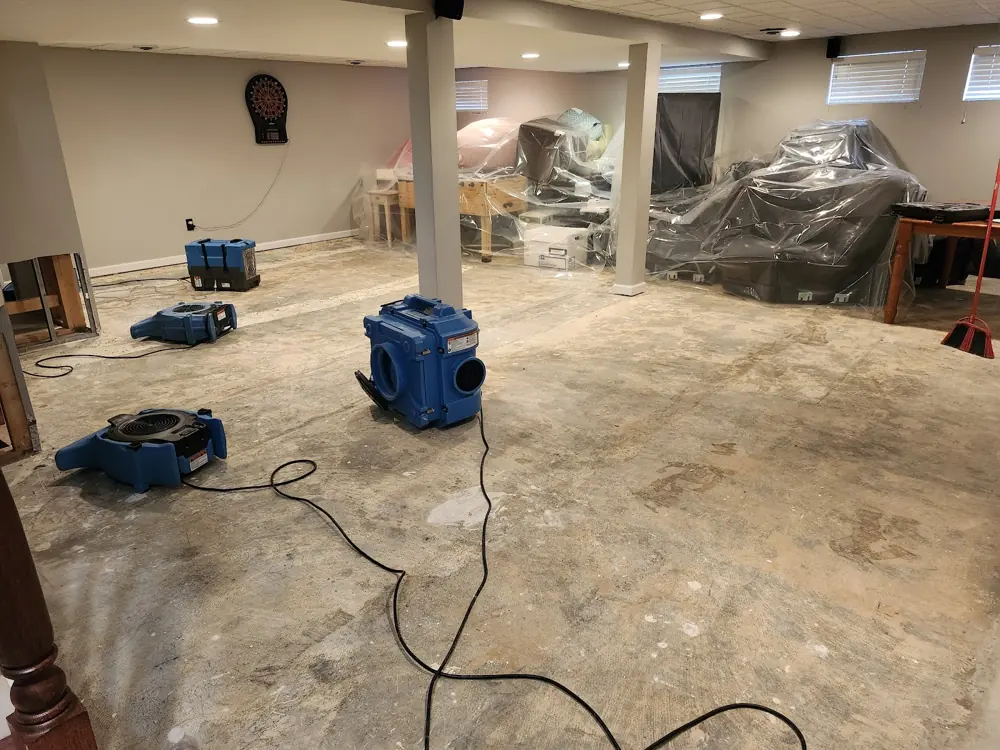
Air movers and dehumidifiers dry the flooring, walls, framing, and crawlspace the water reached, with daily readings until the whole area is back to a safe level.
Once the line is repaired, crews rebuild the flooring, drywall, and trim the water damaged, and restore the affected areas so the break leaves no lasting trace.

While help is on the way, these first steps, done only where it is safe, limit the damage and protect the insurance claim.
Shut the supply off at the source, or close the home's main valve if the source is not obvious. Stopping the flow limits the damage more than anything else.
Switch off electricity to the affected area, but only if the breaker can be reached without standing in or touching the water.
Get a crew dispatched right away. The sooner extraction and drying begin, the more flooring, drywall, and belongings can be saved.
Take photos and a short video of the water and the affected rooms before anything is moved, so the insurance claim starts strong.
Water main break cleanup in Little Rock generally runs $1,500 to $8,000 for the interior water damage, separate from the line repair. The cost depends on how much water entered, how far it spread, and whether the crawlspace and finished rooms were involved. Coverage varies, since damage from a private service line differs from a city main, so crews document the source and damage carefully for your claim.
Crews reach Little Rock and central Arkansas fast, from Hillcrest and The Heights to the Quapaw Quarter, Pulaski Heights, and nearby North Little Rock and Sherwood. See the full list on the areas served across Little Rock page.
See all areas servedEvery loss is photographed, measured, and logged from the first visit, so the paperwork holds up with your insurance carrier.
Technicians follow recognized IICRC drying standards and prove the work with daily moisture readings, not guesswork.
Emergency dispatch any hour of the day or night, with a real crew on the way, not a callback in the morning.
A real crew dispatched any hour, not a callback in the morning.
Trained technicians following recognized IICRC drying standards.
Truck-mounted, portable, and submersible for any size loss.
The loss is documented and billed to the carrier directly.
A burst pipe is inside your home's plumbing, while a water main break is in the larger pressurized supply line, either the city main in the street or the service line running to your house. Main breaks usually involve more water and surface outside first, then flow toward and into the home.
It depends on where the break is. The utility typically handles the city main in the street, while the service line from the meter to your house is usually the homeowner's responsibility. That distinction also affects insurance, so crews document exactly where the break occurred and what it damaged for your claim.
The crews reach most of the Little Rock area in about an hour, which matters because a pressurized main can release water the entire time it is charged. Once the supply is shut, fast extraction limits how far the high volume spreads into the crawlspace, floors, and walls.
The resulting interior water damage is often covered, though coverage can differ between a city main and your private service line, and some policies handle underground line breaks specifically. Crews document the source, the shutoff, and every affected area so your adjuster can apply the right coverage to the claim.
Little Rock crews are on call 24 hours a day, local and fast, and can be on the way within the hour.
Call (501) 287-9058