Overwhelmed sump pumps and failed galvanized lines flood Quapaw Quarter basements during spring storms. Arkansas Water and Fire's local IICRC crews extract and dry those rare full basements fast, with 24/7 availability.

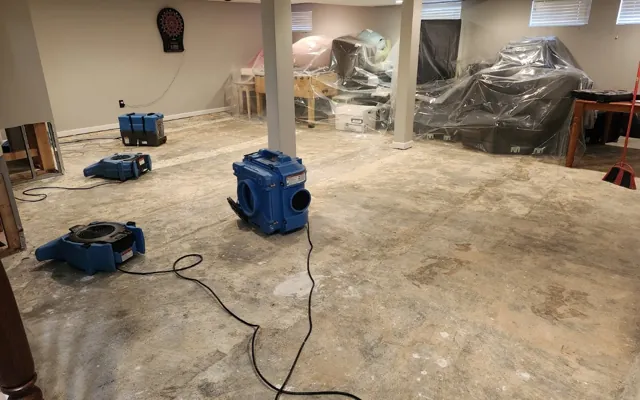
Crews shut the water at the main or call the utility to stop flow, then deploy pump systems into the basement to extract standing water. With water removed, crews can assess the true extent of saturation in basement walls, floor joists, and the foundation itself.
Moisture meters reveal how deep water penetrated basement walls, whether the concrete absorbed saturation, and if water wicked into rim joists and band boards. Quapaw Quarter's older masonry basements can hold moisture for weeks if not properly dried, so crews map every zone before drying starts.
Air movers create flow paths along basement walls and across the floor, while dehumidifiers pull moisture from concrete and wood. Crews monitor daily and adjust equipment placement to ensure the historic basement structure dries evenly without structural stress or mold growth.

Water main break cleanup in Quapaw Quarter generally runs $1,500 to $8,000 for the interior water damage, separate from the line repair. The cost depends on how much water entered, how far it spread, and whether the crawlspace and finished rooms were involved. Coverage varies, since damage from a private service line differs from a city main, so crews document the source and damage carefully for your claim.
Quapaw Quarter is Little Rock's oldest historic residential district, where Victorian and early-1900s homes line quiet streets with National Register protection. These houses are rare in the area for their full basements, and when heavy spring rains overwhelm an aging sump pump or original galvanized plumbing fails upstairs, water fills those lower rooms fast and deep. Quapaw Quarter's Victorian homes carry original galvanized plumbing prone to corrosion and fitting failure, while heavy spring thunderstorms combined with aging sump pumps create basement-flooding risk. The rare full basements here mean larger water volumes and deeper saturation when a main breaks or a pump fails, requiring skilled drying to prevent mold and structural damage. From Quapaw Quarter, crews also cover nearby Governor's Mansion District, South Main Residential Historic District, Downtown, MacArthur Park District, Capitol View/Stifft's Station, Hillcrest. See every neighborhood and town on the full service area page.
See all areas servedEvery loss is photographed, measured, and logged from the first visit, so the paperwork holds up with your insurance carrier.
Technicians follow recognized IICRC drying standards and prove the work with daily moisture readings, not guesswork.
Emergency dispatch any hour of the day or night, with a real crew on the way, not a callback in the morning.
A real crew dispatched any hour, not a callback in the morning.
Trained technicians following recognized IICRC drying standards.
Truck-mounted, portable, and submersible for any size loss.
The loss is documented and billed to the carrier directly.
A water main break or sump failure in Quapaw Quarter can leave the basement saturated for weeks if not properly dried, and moisture that reaches foundation concrete or rim joists can lead to mold, rot, and structural weakness. That's why crews use industrial drying and daily moisture checks to bring the basement back to equilibrium. Early extraction and drying prevent the expensive foundation repairs that come later.
You can't prevent an old utility line from failing, but you can prepare. A backup sump pump, perimeter drain monitoring, and an inspection of your supply line can catch early signs of corrosion or fitting wear. If your Quapaw Quarter home is over 70 years old, consider having the water line video-inspected. Once you know the risk, call immediately if water appears in the basement.
Crews are on call 24 hours a day and can be on the way to Quapaw Quarter within the hour.
Call (501) 287-9058