Spring thunderstorms overwhelm aging drains in Downtown Little Rock's historic buildings. The IICRC-standard crew responds fast to extract water, dry structures to specification, and protect against repeat floods. Local expertise you can count on.

Crews remove standing water using truck-mounted pumps, then scan shared walls and adjoining spaces with moisture meters to trace the full scope of the damage before any remediation begins.
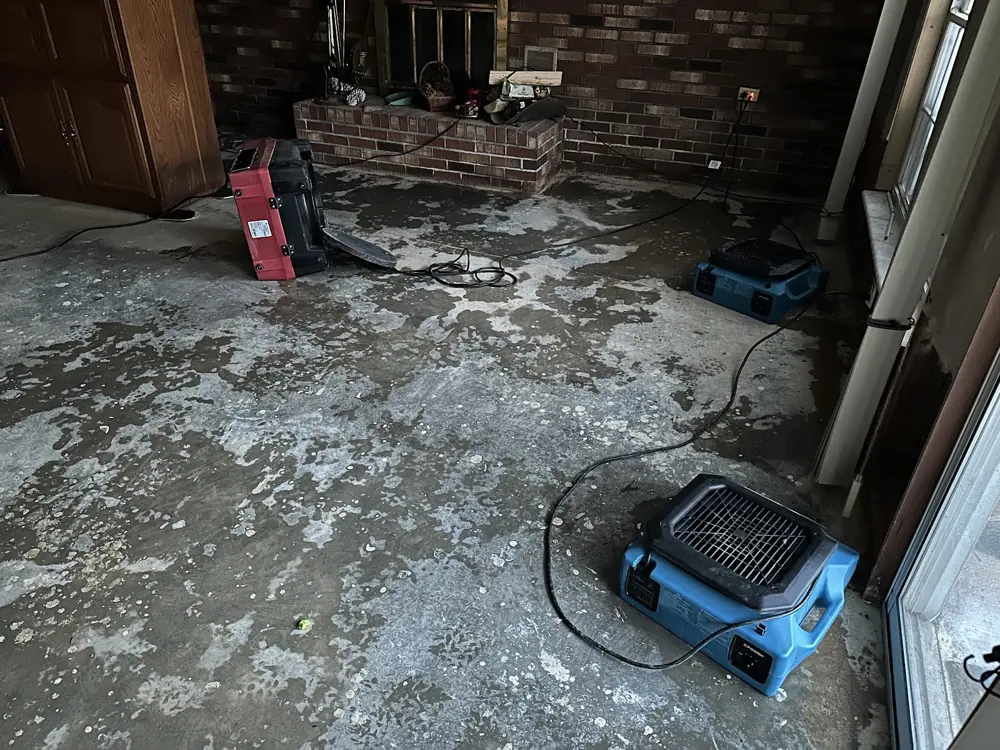
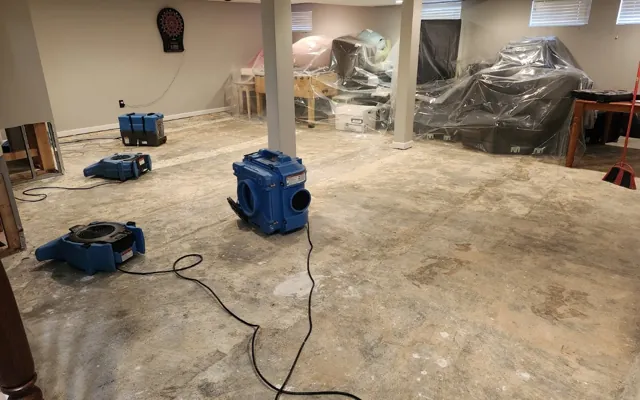
Damaged drywall is opened along wall bases where moisture penetrated the frame. Industrial dehumidifiers and air movers run continuously while crews treat all wet surfaces with antimicrobial to prevent mold growth.
Crews replace damaged drywall and baseboards, then recommend improvements like better drainage or foundation sealing so the next storm doesn't push water straight into the building.

Garage water damage cleanup in Downtown generally runs $800 to $4,000. The cost depends on how much water entered, whether it crossed into the living space, and how much drywall and stored material was ruined. Sudden causes like a water-heater rupture are often covered by homeowner insurance, while recurring storm runoff may be treated as a maintenance issue. Crews document the cause for your claim.
Downtown Little Rock's dense core of early-1900s commercial and residential buildings sits low near the Arkansas River, where spring storms send torrents into shared walls and adjoining rooms. Many carry original cast-iron drain runs and decades-old galvanized supply lines prone to failure. When water enters, it spreads fast through floors and framing in ways that aren't always visible at first. Downtown's low topography and proximity to the Arkansas River make it vulnerable to flash flooding during spring thunderstorms. Aging cast-iron and galvanized plumbing fails regularly in these century-old structures. Shared walls mean water spreads between units before anyone notices the source. From Downtown, crews also cover nearby Quapaw Quarter, Governor's Mansion District, South Main Residential Historic District, MacArthur Park District, Capitol View/Stifft's Station, Hillcrest. See every neighborhood and town on the full service area page.
See all areas servedEvery loss is photographed, measured, and logged from the first visit, so the paperwork holds up with your insurance carrier.
Technicians follow recognized IICRC drying standards and prove the work with daily moisture readings, not guesswork.
Emergency dispatch any hour of the day or night, with a real crew on the way, not a callback in the morning.
A real crew dispatched any hour, not a callback in the morning.
Trained technicians following recognized IICRC drying standards.
Truck-mounted, portable, and submersible for any size loss.
The loss is documented and billed to the carrier directly.
Crews dispatch crews from Little Rock within 30 to 60 minutes of your call during business hours, and maintain 24/7 emergency response for sudden losses like burst pipes or storm damage. Downtown's central location means faster arrival and faster initial water removal.
Not necessarily. Once standing water is removed and affected areas are opened and drying equipment is in place, many Downtown businesses stay occupied in dry zones. Crews work around your schedule and try to minimize disruption.
Crews are on call 24 hours a day and can be on the way to Downtown within the hour.
Call (501) 287-9058