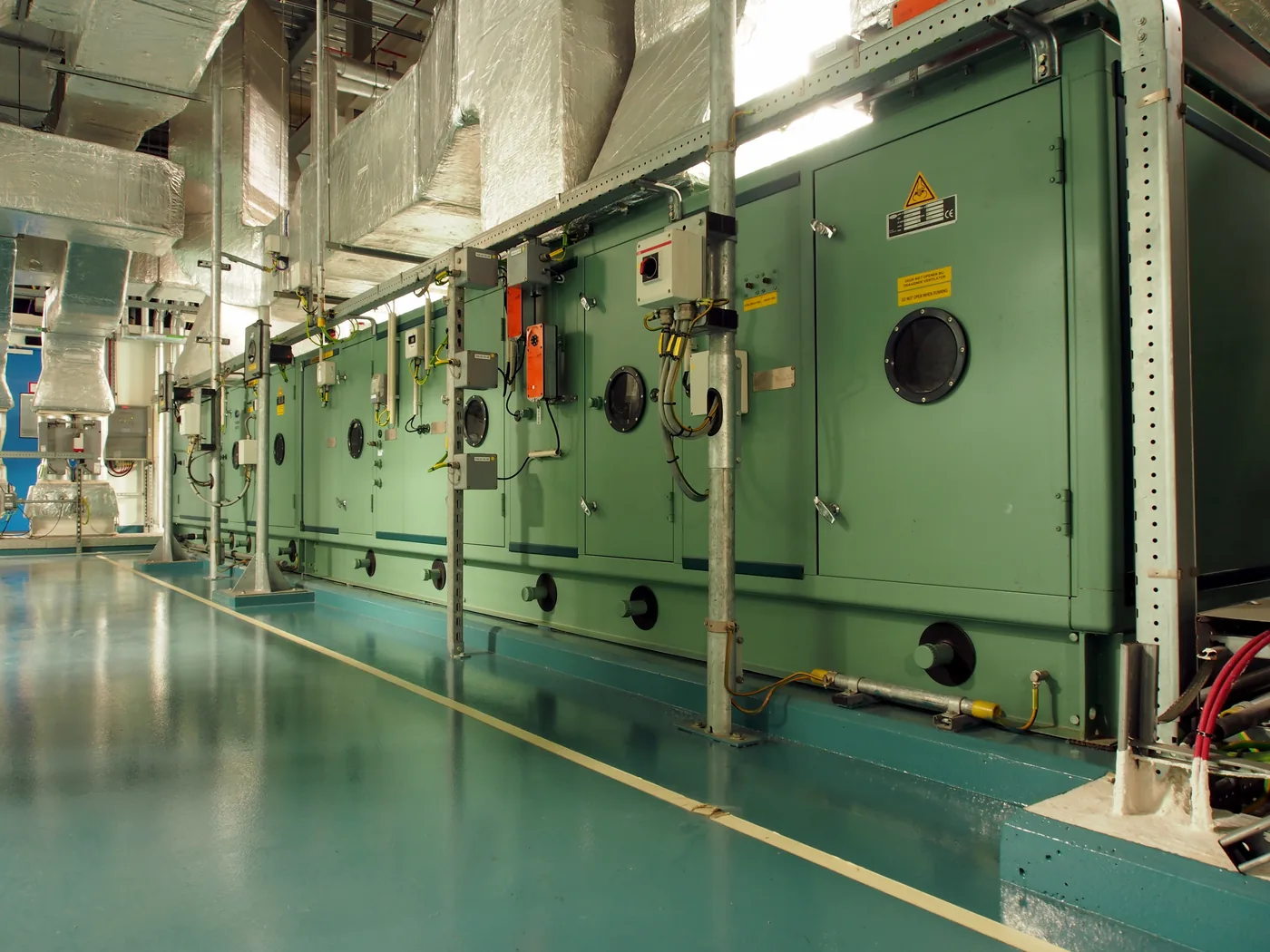
When water pools around your Downtown, AR HVAC unit, the IICRC-standard crew arrives fast to extract it, map the damage, and dry your framing before mold takes hold.

Crews scan your HVAC closet and overhead spaces with moisture meters, confirm whether the pan, line, or condensate drain is the source, and trace water paths.
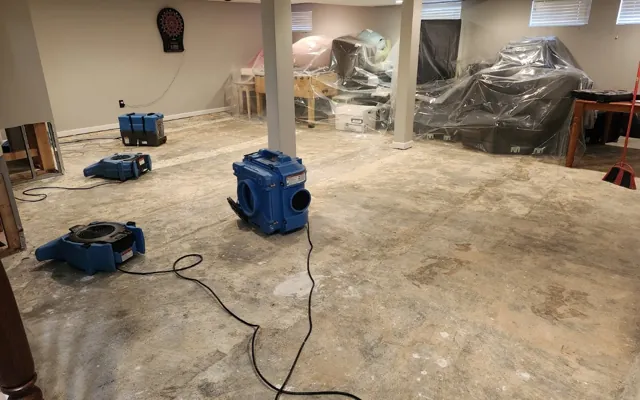
Standing water is pumped out, wet ceilings are carefully opened, and platform boards are lifted so trapped moisture evaporates instead of rotting framing beneath.
Industrial air movers and a dehumidifier run for days, pulling moisture from framing and drywall. Crews treat any mold, repair the ceiling, and recommend condensate line clearing or pan switch installation.

HVAC condensation cleanup in Downtown usually runs $500 to $3,500. The cost depends on where the unit sits, how long the drain overflowed, and whether the ceiling, platform, or attic framing was damaged. Because these leaks build slowly, insurers sometimes treat them as maintenance, though a sudden pan or line failure may be covered. Crews document the source and moisture readings for your claim.
Downtown Little Rock's dense low-lying blocks near the Arkansas River face real risk: aging cast-iron drains and decades-old supply lines fail without warning, sending water through multiple floors. An HVAC pan overflow or a condensate line backup can rot framing in the heart of old construction before you see a soft spot. Downtown sits low and old. Cast-iron drains corrode, supply lines fail, and crawlspace moisture rises fast in the humid South. Spring thunderstorms and burst pipes in older buildings make these leaks inevitable. From Downtown, crews also cover nearby Quapaw Quarter, Governor's Mansion District, South Main Residential Historic District, MacArthur Park District, Capitol View/Stifft's Station, Hillcrest. See every neighborhood and town on the full service area page.
See all areas servedEvery loss is photographed, measured, and logged from the first visit, so the paperwork holds up with your insurance carrier.
Technicians follow recognized IICRC drying standards and prove the work with daily moisture readings, not guesswork.
Emergency dispatch any hour of the day or night, with a real crew on the way, not a callback in the morning.
A real crew dispatched any hour, not a callback in the morning.
Trained technicians following recognized IICRC drying standards.
Truck-mounted, portable, and submersible for any size loss.
The loss is documented and billed to the carrier directly.
Drying depends on depth and material: framing typically needs 3 to 7 days with industrial equipment running continuously. Crews meter daily and provide you a drying curve so you know exactly when the job is complete and safe to rebuild.
Sudden pan or line failure is often covered, but slow drips are treated as maintenance. Crews document the cause with photos and readings; your adjuster decides coverage. Either way, crews stop the water damage and protect the rest of your home.
Crews are on call 24 hours a day and can be on the way to Downtown within the hour.
Call (501) 287-9058