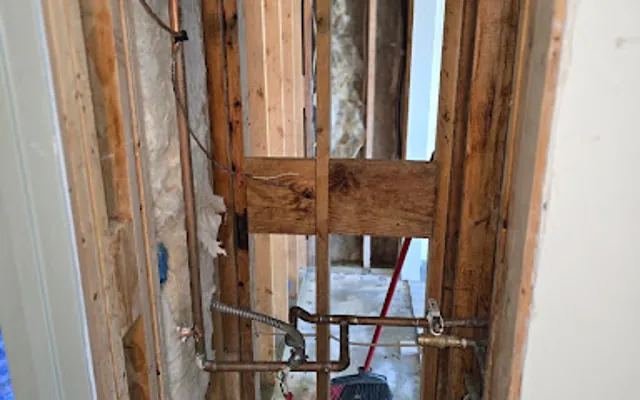
Winter ice storms burst historic Downtown, AR pipes in minutes. The local, IICRC-standard crews extract water immediately and dry every hidden pocket with thermal imaging and daily readings, preventing costly secondary damage to century-old framing.

Crews find the frozen split, cut the water, and pump standing water from walls, floors, and framing cavities right away so it stops wicking into adjacent spaces and soaking structural wood deeper.
Crews open wall and floor sections where the thaw left moisture behind, then scan every cavity with moisture meters and thermal imaging to map exactly where water penetrated and lingers.
Air movers and dehumidifiers run around the clock as crews track moisture daily until the entire affected zone meets industry standards for dryness and safety.

Frozen pipe water damage in Downtown typically runs $2,000 to $9,000. The cost is driven by how long the line ran after thawing, how many rooms and floors the water reached, and whether hardwood or ceilings were involved. Sudden freeze-related pipe breaks are usually covered by homeowner insurance when the home was reasonably heated. Crews document the cause and coordinate the claim directly.
Downtown Little Rock's historic district clusters older commercial buildings and residences in a dense, low-lying zone near the Arkansas River. Many sit atop aging cast-iron drains and decades-old supply lines where a burst pipe floods multiple floors before anyone spots the first puddle. Downtown's aging cast-iron plumbing and dense basement areas make it vulnerable to sudden freezes and thaws that split old supply lines. Spring thunderstorms also overwhelm aging drainage systems here, sending water through multiple levels before it is caught. From Downtown, crews also cover nearby Quapaw Quarter, Governor's Mansion District, South Main Residential Historic District, MacArthur Park District, Capitol View/Stifft's Station, Hillcrest. See every neighborhood and town on the full service area page.
See all areas servedEvery loss is photographed, measured, and logged from the first visit, so the paperwork holds up with your insurance carrier.
Technicians follow recognized IICRC drying standards and prove the work with daily moisture readings, not guesswork.
Emergency dispatch any hour of the day or night, with a real crew on the way, not a callback in the morning.
A real crew dispatched any hour, not a callback in the morning.
Trained technicians following recognized IICRC drying standards.
Truck-mounted, portable, and submersible for any size loss.
The loss is documented and billed to the carrier directly.
If your supply line runs through an uninsulated wall or crawlspace, yes. After crews dry the damage, your plumber can wrap the vulnerable section with foam or heat tape, or relocate it to a warmer cavity. Most Downtown owners add insulation to older exposed runs to avoid repeat loss during hard freezes.
The local team responds 24/7 from the central Little Rock area. Downtown is less than a mile from the staging area, so crews typically dispatch crews within 45 minutes of your call, even at night or on weekends, to start water extraction and prevent spread.
Crews are on call 24 hours a day and can be on the way to Downtown within the hour.
Call (501) 287-9058