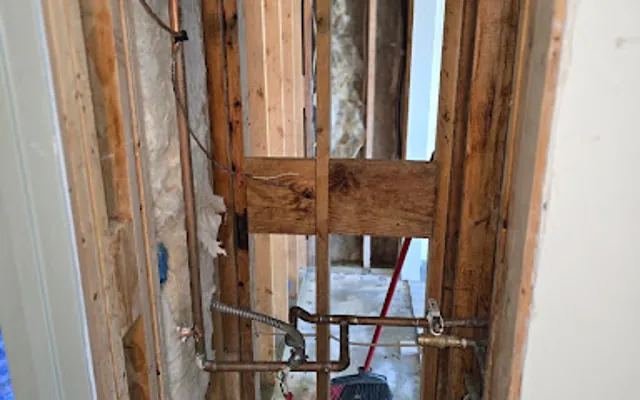
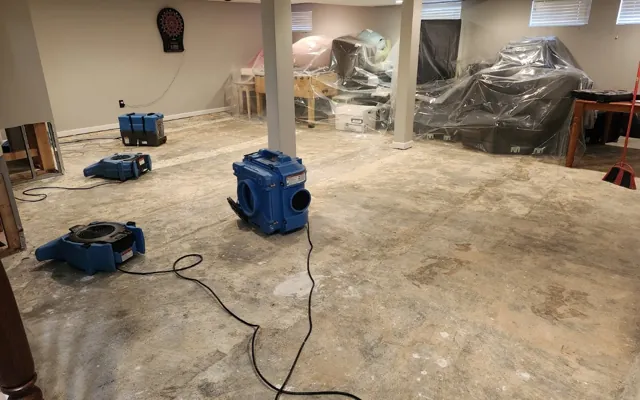
Soft spots in the floor or discoloration on ceiling drywall signal a frozen pipe burst in Governor's Mansion District, AR. The IICRC-standard crews respond immediately to locate the split line and extract water before it reaches structural framing, protecting these historic early-1900s homes.

Crews locate the frozen split in galvanized or cast-iron lines, shut off the water immediately, and begin extracting standing water from walls, subfloors, and cavities to halt the spread.
Crews carefully open walls and floors to inspect the century-old framing for saturation and damage risk. Thermal imaging and moisture meters map every wet pocket so crews know the full scope of work.
Crews run air movers and dehumidifiers continuously, tracking daily moisture levels until the framing and finishes meet drying standards safe for antique plaster, original wood, and historic materials.

Frozen pipe water damage in Governor's Mansion District typically runs $2,000 to $9,000. The cost is driven by how long the line ran after thawing, how many rooms and floors the water reached, and whether hardwood or ceilings were involved. Sudden freeze-related pipe breaks are usually covered by homeowner insurance when the home was reasonably heated. Crews document the cause and coordinate the claim directly.
Governor's Mansion District's early-1900s homes sit in a dense National Register historic district just south of downtown. Most carry original cast-iron and galvanized plumbing still delivering water and waste, and a corroded fitting or a hard winter freeze can split a line and soak old framing within hours. Governor's Mansion District's century-old homes carry original cast-iron and galvanized supply and drain lines that corrode and fail under freeze-thaw stress. Hard winter freezes are common enough in central Arkansas to burst even partially sound lines, and the dense construction traps water in tight spaces. From Governor's Mansion District, crews also cover nearby Quapaw Quarter, South Main Residential Historic District, MacArthur Park District, Downtown, Capitol View/Stifft's Station, Hillcrest. See every neighborhood and town on the full service area page.
See all areas servedEvery loss is photographed, measured, and logged from the first visit, so the paperwork holds up with your insurance carrier.
Technicians follow recognized IICRC drying standards and prove the work with daily moisture readings, not guesswork.
Emergency dispatch any hour of the day or night, with a real crew on the way, not a callback in the morning.
A real crew dispatched any hour, not a callback in the morning.
Trained technicians following recognized IICRC drying standards.
Truck-mounted, portable, and submersible for any size loss.
The loss is documented and billed to the carrier directly.
Yes. Original plumbing from the 1920s is thinner-walled and more brittle than modern code-compliant lines. If your supply lines run through exterior walls or unheated spaces, they freeze faster. Many homeowners here have added insulation or relocated lines to interior walls to reduce freeze risk.
Usually, if the home was reasonably heated when the freeze happened. Homeowner policies typically cover sudden, accidental water loss from a burst pipe. Crews document the cause and timeline so your claim has the evidence needed. If the home was abandoned or unheated, coverage may be denied.
Crews are on call 24 hours a day and can be on the way to Governor's Mansion District within the hour.
Call (501) 287-9058