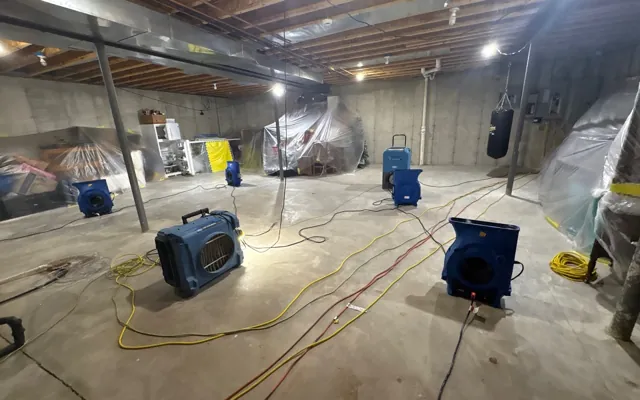
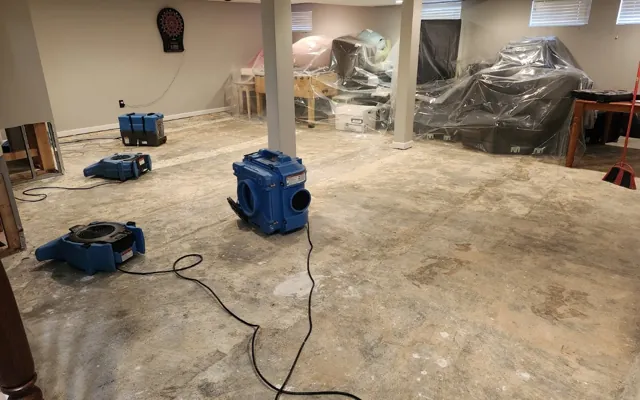
Pulaski Heights' historic sump systems often fail or are undersized for modern storms. When a pump quits, water climbs into crawlspaces and threatens century-old wood framing. The IICRC crew extracts it, saves what can be saved, dries carefully, and recommends protective upgrades.

Crews examine the failed pump, check the pit for sediment or debris, and extract standing water from the crawlspace. For older homes, crews document water levels to assess whether the pit and pump were sized adequately for the home's drainage load.
Soaked insulation is removed, but careful attention is paid to preserving original wood framing where possible. Exposed historic wood is documented and treated with antimicrobial to arrest any mold growth.
Pulaski Heights' old wood takes longer to dry than modern lumber. Crews run dehumidifiers for 8 to 10 days with daily monitoring to ensure deep moisture in rim joists and subfloor does not harbor mold.

Sump pump failure cleanup in Pulaski Heights usually runs $1,500 to $6,500, depending on how much water collected, whether it was a crawlspace or a finished lower level, and how much material was soaked. A replacement pump with battery backup adds $600 to $2,000. Sudden pump failure and the resulting water damage are often covered by homeowner insurance. Crews document the loss and coordinate your claim.
Pulaski Heights is an early-1900s streetcar suburb with older homes that often carry original sump systems or systems installed decades ago and undersized for the region's spring rains. A pump failure or blockage during heavy weather can leave standing water pooling in crawlspaces and threatening structural wood that has already endured 100 years. Pulaski Heights' early-1900s plumbing and foundation construction often feature sump systems that are original to the home or last updated 30 to 50 years ago and now undersized for modern storm intensity. Clay soils and old drainage patterns mean water accumulates quickly when a pump fails. From Pulaski Heights, crews also cover nearby Riverdale, East Little Rock, North Little Rock, The Heights, Hillcrest, Broadmoor. See every neighborhood and town on the full service area page.
See all areas servedEvery loss is photographed, measured, and logged from the first visit, so the paperwork holds up with your insurance carrier.
Technicians follow recognized IICRC drying standards and prove the work with daily moisture readings, not guesswork.
Emergency dispatch any hour of the day or night, with a real crew on the way, not a callback in the morning.
A real crew dispatched any hour, not a callback in the morning.
Trained technicians following recognized IICRC drying standards.
Truck-mounted, portable, and submersible for any size loss.
The loss is documented and billed to the carrier directly.
Your pump should empty the pit in 5 to 10 minutes and keep up with water inflow during heavy rain. If the pit never fully empties or water rises steadily despite the pump running, the system is undersized or blocked. A plumber can perform a flow-rate test to confirm adequate sizing.
In most cases, yes. If wood is exposed quickly and treated with antimicrobial and dried within 48 hours, it can recover without structural compromise. Historic preservation specialists can assess whether original wood is salvageable and recommend period-appropriate repairs or reinforcement.
Crews are on call 24 hours a day and can be on the way to Pulaski Heights within the hour.
Call (501) 287-9058