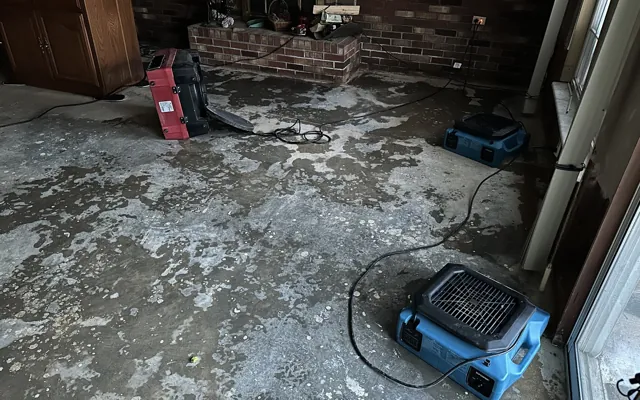
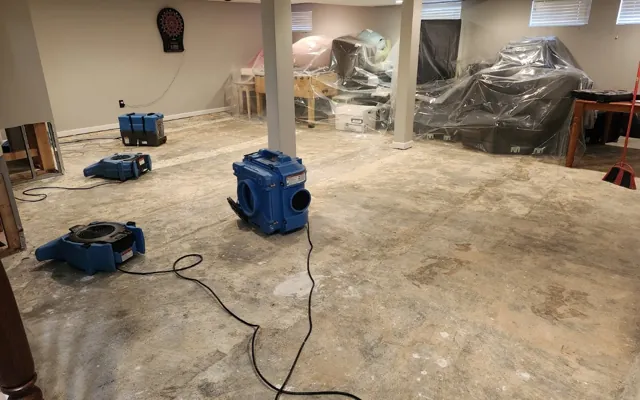
Pulaski Heights' early-1900s streetcar homes carry aged cast-iron plumbing and crawlspaces prone to moisture. When a corroded line ruptures or a storm overwhelms drainage, the IICRC crew extracts and dries the structure within hours, preventing mold and securing your historic home's integrity.

Specialized pumps remove water fast from Pulaski Heights crawlspaces. Crews assess what salvageable versus what must be removed, and sample surfaces for contamination so crews know if raw sewage reached the space.
Soaked insulation, vapor barriers, and lower drywall come out carefully to prevent spreading contamination. Cast-iron rim joists and wooden subfloor are cleaned with antimicrobial and left to dry fully.
Large dehumidifiers and air movers run day and night until deep-cavity moisture readings prove the framing and subfloor are safe. Pulaski Heights' older wood sometimes takes longer to dry due to tight grain and age.

Storm flood cleanup in Pulaski Heights varies widely, often from $3,000 to $15,000 or more, because floods reach large areas and bring contaminated water. The cost depends on the depth and category of water, how much material must be removed, and the rebuild required. Note that standard homeowner insurance often excludes surface flooding, which needs separate flood coverage. Crews document everything for whichever policy applies.
Pulaski Heights developed as a walkable streetcar suburb in the early 1900s, and its older Craftsman and Victorian homes still rely on original cast-iron and galvanized plumbing systems. Corrosion, tree roots, and severe spring thunderstorms can breach these aging lines, sending floodwater across crawlspaces and first floors before homeowners spot the source. Pulaski Heights' streetcar-era plumbing infrastructure and crawlspace foundations make the neighborhood especially vulnerable to pipe failure, sewer backup, and heavy-rain-driven flooding. Older cast-iron sewer lines corrode from inside, and tree roots often penetrate cracks, causing backups that push raw sewage into crawlspaces and basements. From Pulaski Heights, crews also cover nearby Riverdale, East Little Rock, North Little Rock, The Heights, Hillcrest, Broadmoor. See every neighborhood and town on the full service area page.
See all areas servedEvery loss is photographed, measured, and logged from the first visit, so the paperwork holds up with your insurance carrier.
Technicians follow recognized IICRC drying standards and prove the work with daily moisture readings, not guesswork.
Emergency dispatch any hour of the day or night, with a real crew on the way, not a callback in the morning.
A real crew dispatched any hour, not a callback in the morning.
Trained technicians following recognized IICRC drying standards.
Truck-mounted, portable, and submersible for any size loss.
The loss is documented and billed to the carrier directly.
Yes. Cast-iron corrodes from inside over 80 plus years, becoming brittle and prone to collapse and cracks. Tree roots seek out these cracks for moisture, and the combination can back sewage into your crawlspace during heavy rain or whenever the municipal line is overwhelmed. An inspection camera can reveal the line's condition.
If you have not yet experienced a backup or freezing issue, an inspection is wise before a loss happens. Replacement is costly but prevents future emergencies. Many Pulaski Heights homeowners replace cast-iron lines when they renovate, or immediately after a sewer backup to avoid a repeat.
Crews are on call 24 hours a day and can be on the way to Pulaski Heights within the hour.
Call (501) 287-9058