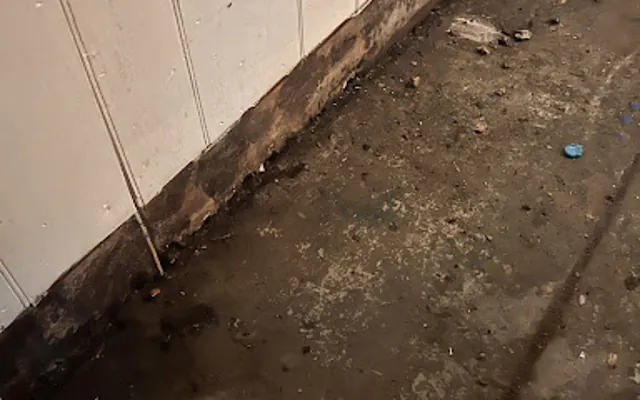
College Station sits on low, flat Pulaski County ground where aging plumbing and failed water heaters send sewage spreading through shallow crawlspaces fast. Arkansas Water and Fire's IICRC-standard crews respond within hours to contain, extract, and dry your home.

Crews enter your College Station home's crawlspace or affected area and immediately set up containment barriers and decontamination controls to stop the spread of sewage and contamination.
Standing sewage and water are extracted from your College Station property. All porous materials saturated by raw sewage are carefully removed and disposed of offsite per hazmat protocols.
Every hard surface touched by contamination is cleaned and treated with hospital-grade antimicrobial agents. Industrial dehumidifiers dry your home to safe levels. New subflooring and insulation are installed.

Sewage backup cleanup in College Station typically runs $2,500 to $10,000. The cost is driven by how far the contamination spread, how much porous material must be removed and disposed of, and the level of disinfection and rebuild required. Because sewage is category-three water, handling is strict and thorough. Many homeowner policies cover sudden backups, especially with an endorsement. Crews document everything for your claim.
College Station is an older residential community southeast of Little Rock, a Census-designated place of modest single-family homes on low, flat Pulaski County ground. Aging plumbing and shallow crawlspaces are common, and heavy spring flooding or a failed water heater can leave standing water that spreads before help arrives. College Station's low elevation and shallow crawlspaces make it vulnerable to spring flooding and water heater ruptures. Aging plumbing means failed supply lines are common. When water or sewage reaches the crawlspace, it spreads unnoticed through subflooring and framing. From College Station, crews also cover nearby Southwest Little Rock, Pleasant Valley, Sweet Home, McAlmont, Cammack Village, Broadmoor. See every neighborhood and town on the full service area page.
See all areas servedEvery loss is photographed, measured, and logged from the first visit, so the paperwork holds up with your insurance carrier.
Technicians follow recognized IICRC drying standards and prove the work with daily moisture readings, not guesswork.
Emergency dispatch any hour of the day or night, with a real crew on the way, not a callback in the morning.
A real crew dispatched any hour, not a callback in the morning.
Trained technicians following recognized IICRC drying standards.
Truck-mounted, portable, and submersible for any size loss.
The loss is documented and billed to the carrier directly.
Yes, most water heaters last 10 to 15 years. If yours is older than 12 years and sits in your College Station crawlspace, consider replacing it before it fails. A new water heater is much cheaper than cleanup after a rupture. Crews see water heater failures regularly in College Station homes.
Most College Station homes take 5 to 7 days to dry completely with industrial dehumidifiers running 24/7. Crews measure moisture daily and only stop when readings confirm the structure is safe. Larger floods or older homes may take longer. Crews keep you updated on the drying schedule.
Crews are on call 24 hours a day and can be on the way to College Station within the hour.
Call (501) 287-9058