College Station's modest homes on low Pulaski County ground flood fast when appliances fail or water heaters rupture. The crew pumps out standing water, dries College Station crawlspaces to safe levels, and documents the loss for insurance within hours of your call.

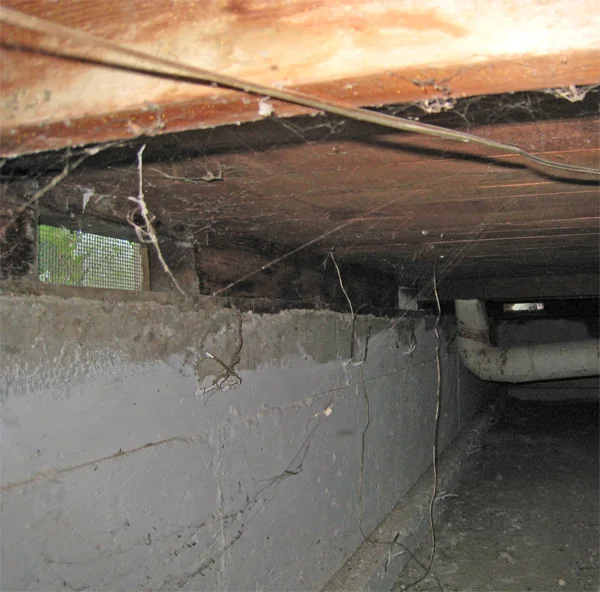
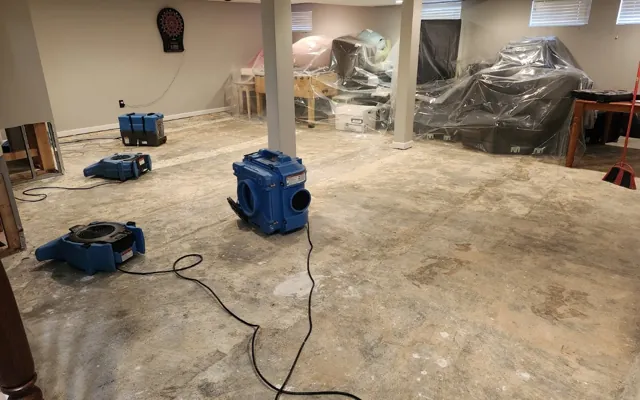
High-capacity pumps extract standing water from College Station homes while crews remove soaked insulation and deteriorated vapor barrier. Opening the crawlspace to air circulation is the first step toward saving the framing.
Commercial dehumidifiers operate continuously until joists, subfloor, and the low-lying Pulaski County soil all reach safe moisture levels. Patient drying is essential to prevent mold growth in College Station homes.
Antimicrobial application prevents mold on College Station framing where water was present. A new vapor barrier blocks ground moisture, protecting the home from repeat water damage in this low-lying area.

Crawlspace water removal in College Station usually runs $1,200 to $6,000. The range reflects how much water pooled, how saturated the soil and insulation became, and whether joists need treatment or a drain and sump are added. Sudden plumbing failures are often covered by homeowner insurance, while long-term seepage from grading may not be. Crews document the cause and drying either way.
College Station is an older residential community southeast of Little Rock, a Census-designated place of modest single-family homes on low, flat Pulaski County ground. Aging plumbing and shallow crawlspaces are the norm here. Heavy spring flooding or a failed water heater can leave standing water that spreads through College Station floors before help arrives. College Station sits on low, flat Pulaski County ground where drainage is poor and water accumulates. Aging plumbing failures are common in College Station homes, and failed water heaters can dump hundreds of gallons in minutes. Spring storms regularly overwhelm drainage systems in College Station, pushing water toward garages and lower rooms. From College Station, crews also cover nearby Southwest Little Rock, Pleasant Valley, Sweet Home, McAlmont, Cammack Village, Broadmoor. See every neighborhood and town on the full service area page.
See all areas servedEvery loss is photographed, measured, and logged from the first visit, so the paperwork holds up with your insurance carrier.
Technicians follow recognized IICRC drying standards and prove the work with daily moisture readings, not guesswork.
Emergency dispatch any hour of the day or night, with a real crew on the way, not a callback in the morning.
A real crew dispatched any hour, not a callback in the morning.
Trained technicians following recognized IICRC drying standards.
Truck-mounted, portable, and submersible for any size loss.
The loss is documented and billed to the carrier directly.
Visually inspect it twice a year for corrosion and leaks. If you see rust stains or water pooling around the base, the heater is likely failing. Replace it proactively in College Station homes rather than waiting for a rupture.
Yes, if crawlspaces are connected or drainage flows between properties, water can affect adjacent College Station homes. Crews document the water path clearly so liability is understood for insurance purposes.
Crews are on call 24 hours a day and can be on the way to College Station within the hour.
Call (501) 287-9058