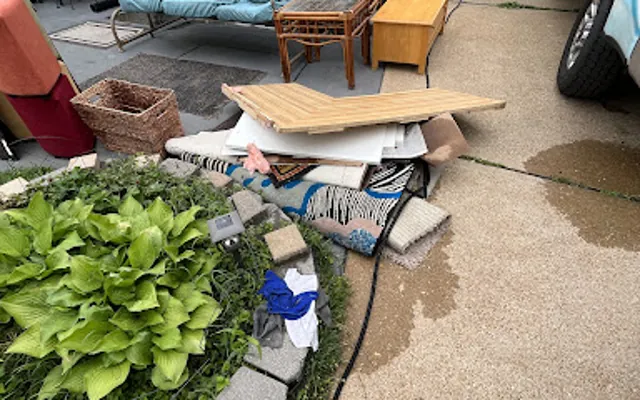
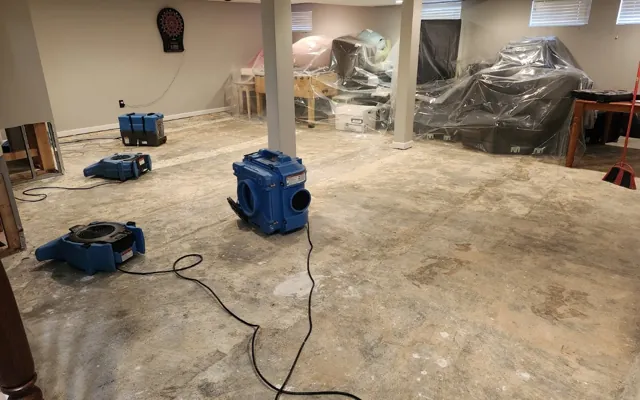
Mid-century Sherwood homes with slab and crawlspace foundations see slow leaks and supply-line failures. Arkansas Water and Fire's IICRC crews extract and dry with expert monitoring and 24/7 response.

Crews locate the main shutoff and stop flow immediately. If water is under the slab or in the crawlspace, crews extract it fast before saturation spreads into framing and soil.
Thermal imaging and moisture meters help the crew locate leaks and saturation hidden under slabs or in crawlspace cavities. Sherwood's construction often hides water, so crews use advanced tools.
Air movers and dehumidifiers target affected slab and crawlspace areas, with daily readings confirming progress. Crews continue until moisture is fully removed.

Water main break cleanup in Sherwood generally runs $1,500 to $8,000 for the interior water damage, separate from the line repair. The cost depends on how much water entered, how far it spread, and whether the crawlspace and finished rooms were involved. Coverage varies, since damage from a private service line differs from a city main, so crews document the source and damage carefully for your claim.
Sherwood is an established suburban city northeast of Little Rock, built out largely with mid-century and later single-family homes. Many sit on slab or crawlspace foundations where a slow supply-line leak can run undetected, and heavy spring storms regularly push water toward garages and lower rooms. Sherwood's mid-century homes often have water lines buried in slabs or running through crawlspaces, where slow leaks can hide for weeks. Aging galvanized plumbing is common, and freeze-thaw cycles can rupture pipes, sending water under homes before anyone knows the line has failed. From Sherwood, crews also cover nearby West Little Rock, Mabelvale, Landmark, McAlmont, Gibson, Sweet Home. See every neighborhood and town on the full service area page.
See all areas servedEvery loss is photographed, measured, and logged from the first visit, so the paperwork holds up with your insurance carrier.
Technicians follow recognized IICRC drying standards and prove the work with daily moisture readings, not guesswork.
Emergency dispatch any hour of the day or night, with a real crew on the way, not a callback in the morning.
A real crew dispatched any hour, not a callback in the morning.
Trained technicians following recognized IICRC drying standards.
Truck-mounted, portable, and submersible for any size loss.
The loss is documented and billed to the carrier directly.
Watch for unusually high water bills, soft spots in floors, musty smells, or warm spots on the floor (hot water leaks). If you see any signs, call for a thermal imaging scan and moisture meter check. Early detection prevents mold and structural damage that costs thousands to repair.
For slow leaks, a plumber can sometimes re-route the supply line through the wall or reroute drainage. However, if saturation has reached the soil beneath the slab and framing, drying is the first priority. Crews assess the damage and coordinate with a plumber to determine the most cost-effective repair approach.
Crews are on call 24 hours a day and can be on the way to Sherwood within the hour.
Call (501) 287-9058