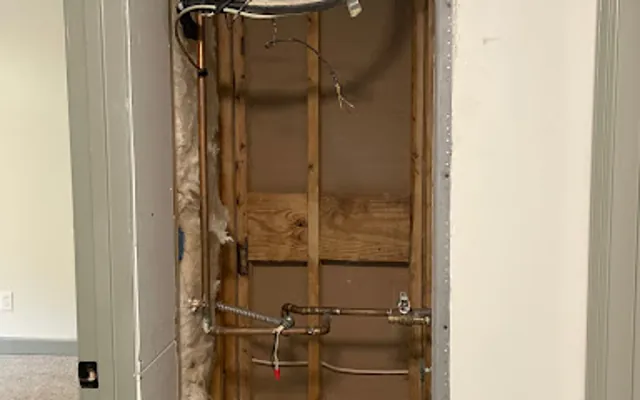
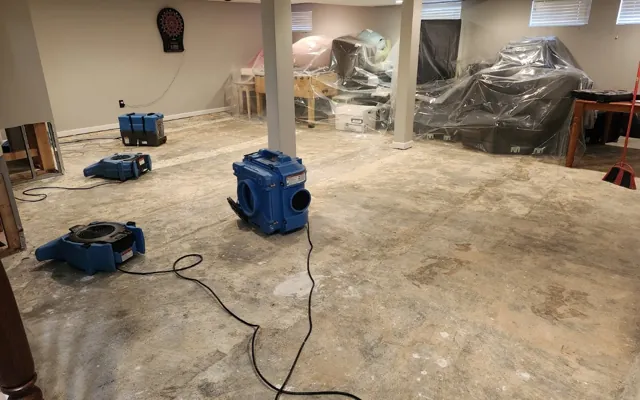
Broadmoor's 1950s and 60s ranch homes built on slabs and crawlspaces with original galvanized supply lines face ruptures and silent leaks that flood subfloors and walls. The IICRC crew locates the burst, extracts pooled water, dries the slab, and prevents the mold that hides under flooring.

Crews identify the supply-line rupture or water-heater failure using water pressure tests or by inspecting visible pipes and fixtures. Fast extraction prevents water from seeping deeper into slab or subfloor cavities.
Soaked carpet, baseboards, or lower drywall affected by standing water are removed. The slab is scrubbed clean, especially if water saturation is deep.
The slab and any cavity above it are treated with antimicrobial and then dehumidified for 4 to 6 days until moisture sensors confirm the slab has returned to safe levels.

Supply line failure cleanup in Broadmoor typically runs $1,500 to $8,000. Because these lines can run for hours unnoticed, the cost depends on how long the water flowed, how many rooms and floors it reached, and whether hardwood or ceilings were involved. Sudden supply line failures are among the most commonly covered water losses on homeowner policies. Crews document the source and coordinate your claim.
Broadmoor is a planned mid-century neighborhood of ranch homes on slab and crawlspace foundations with original galvanized supply lines now 60 to 70 years old and corroded inside. A supply-line rupture or slow leak can send water across a slab or into crawlspace cavities before a homeowner notices soft flooring or a warm patch, and by then saturation may already be advanced. Broadmoor's original galvanized supply lines corrode from the inside out over 60 to 70 years, becoming brittle and prone to rupture without warning. Water heaters, which last only 8 to 15 years, often fail on schedule and can burst, sending tens of gallons per minute across a slab before detection. From Broadmoor, crews also cover nearby The Heights, Cammack Village, Pulaski Heights, Riverdale, East Little Rock, North Little Rock. See every neighborhood and town on the full service area page.
See all areas servedEvery loss is photographed, measured, and logged from the first visit, so the paperwork holds up with your insurance carrier.
Technicians follow recognized IICRC drying standards and prove the work with daily moisture readings, not guesswork.
Emergency dispatch any hour of the day or night, with a real crew on the way, not a callback in the morning.
A real crew dispatched any hour, not a callback in the morning.
Trained technicians following recognized IICRC drying standards.
Truck-mounted, portable, and submersible for any size loss.
The loss is documented and billed to the carrier directly.
If your home still has original galvanized lines at 60+ years old, they are well past their expected lifespan and rupture risk is high. Replacement with PEX or copper is a smart preventative investment. Many Broadmoor homeowners replace during renovations to avoid emergency failures.
Watch for soft spots in flooring, warm patches on slabs, unusually high water bills, or musty smells. If you suspect a leak, have a plumber perform a water-pressure test or locate the leak with specialized equipment. Early detection prevents water from saturating deep into the slab.
Crews are on call 24 hours a day and can be on the way to Broadmoor within the hour.
Call (501) 287-9058