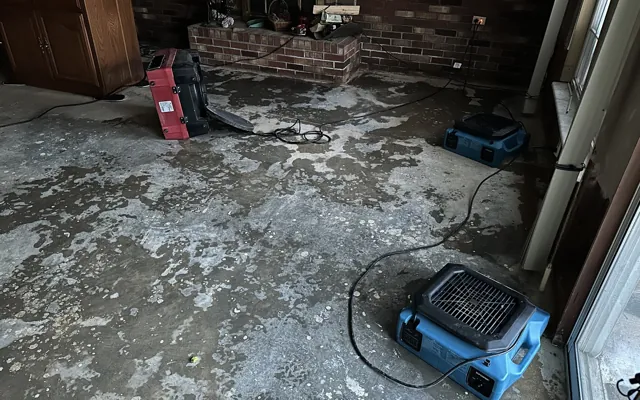
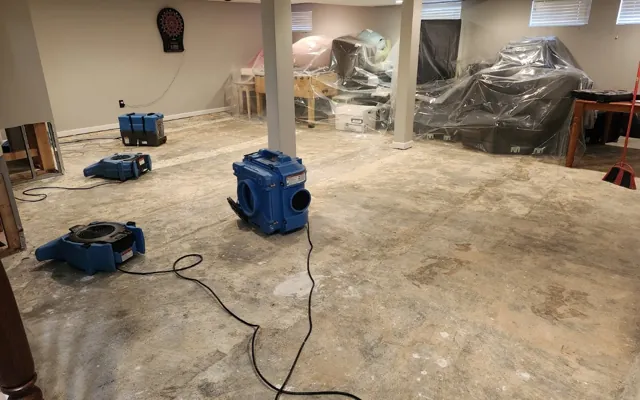
East End's older urban homes sit on aging cast-iron plumbing and slabs vulnerable to sewer backup and storm-driven flooding. When water reaches your foundation, the IICRC crew extracts it, disinfects contaminated surfaces, and dries your home before mold takes hold in aging wood.

Crews pump standing water and immediately assess the water source. If sewage is involved, crews follow strict protocols to remove contaminated material safely and protect health.
Soaked drywall, carpeting, and insulation are removed and disposed of per hazmat protocols if sewage is present. All surfaces are cleaned and disinfected with commercial-grade antimicrobial.
Multiple large dehumidifiers run continuously for 7 to 10 days with daily monitoring to ensure no hidden moisture persists in cavities or subfloor areas where mold could grow undetected.

Storm flood cleanup in East End varies widely, often from $3,000 to $15,000 or more, because floods reach large areas and bring contaminated water. The cost depends on the depth and category of water, how much material must be removed, and the rebuild required. Note that standard homeowner insurance often excludes surface flooding, which needs separate flood coverage. Crews document everything for whichever policy applies.
East End is an older residential neighborhood in central Little Rock with houses built from the early 1900s through the 1950s, many on slabs or shallow crawlspaces with original cast-iron plumbing. Storm surge from heavy rain, a tree-root-invaded sewer line, or a burst supply line can flood ground floors and low-lying areas faster than newer neighborhoods, and contaminated sewer water can pose serious health risks. East End's aging plumbing and early-1900s homes create a perfect storm for floodwater problems. Cast-iron sewer lines are corroded and root-invaded, supply lines are brittle and prone to sudden rupture, and slab-on-grade or shallow-crawlspace construction offers little barrier when heavy rains or sewage backup occur. From East End, crews also cover nearby Maumelle, Wrightsville, Woodson, Alexander, Shannon Hills, Gibson. See every neighborhood and town on the full service area page.
See all areas servedEvery loss is photographed, measured, and logged from the first visit, so the paperwork holds up with your insurance carrier.
Technicians follow recognized IICRC drying standards and prove the work with daily moisture readings, not guesswork.
Emergency dispatch any hour of the day or night, with a real crew on the way, not a callback in the morning.
A real crew dispatched any hour, not a callback in the morning.
Trained technicians following recognized IICRC drying standards.
Truck-mounted, portable, and submersible for any size loss.
The loss is documented and billed to the carrier directly.
Signs include recurring backups, persistent musty smells in the crawlspace, soft ground or sinkholes near the line, and slow drains that worsen after heavy rain. A professional camera inspection can reveal root invasion, corrosion, and offset sections. If failure is confirmed, replacement is more cost-effective than repeated emergency backups.
Sewage contains pathogens and toxic gases that pose serious health risks, especially to children and immunocompromised individuals. Professional hazmat removal and disinfection are essential. All contaminated materials must be removed, and surfaces must be treated with hospital-grade antimicrobials and tested before the home is safe to reoccupy.
Crews are on call 24 hours a day and can be on the way to East End within the hour.
Call (501) 287-9058